






























RF4 RF-55PM-B52 Trinocular Stereo Microscope 6.5-55X
₨80,000
RF4 6.5-55X Trinocular Microscope Set for PCB Work
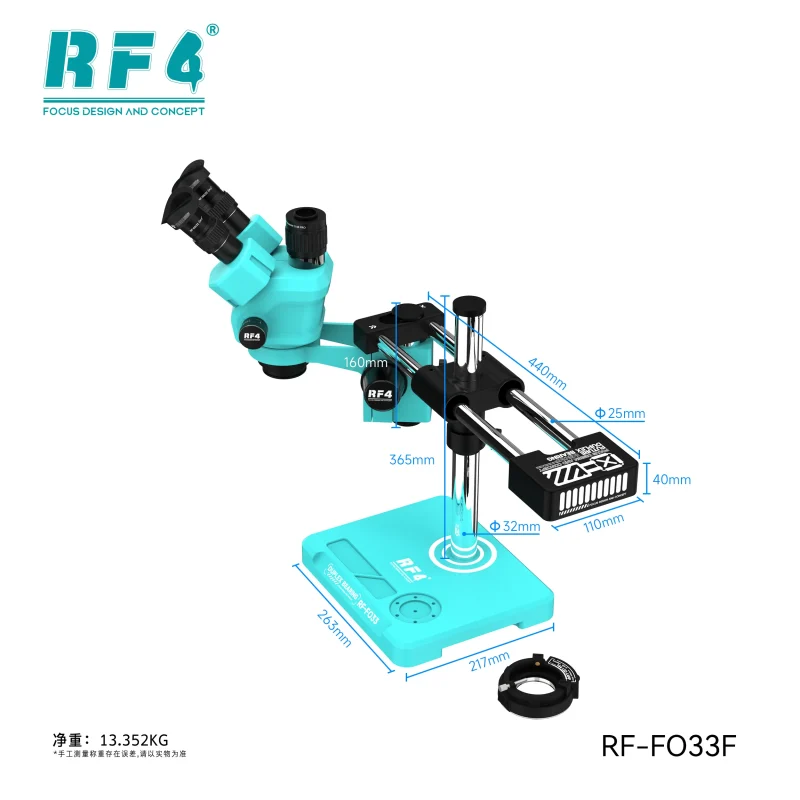
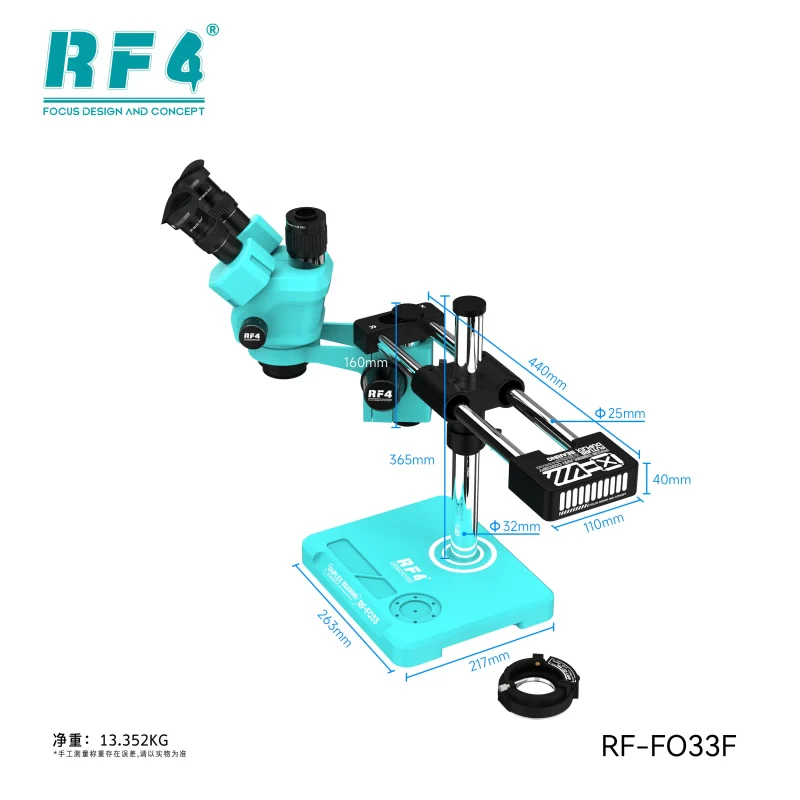
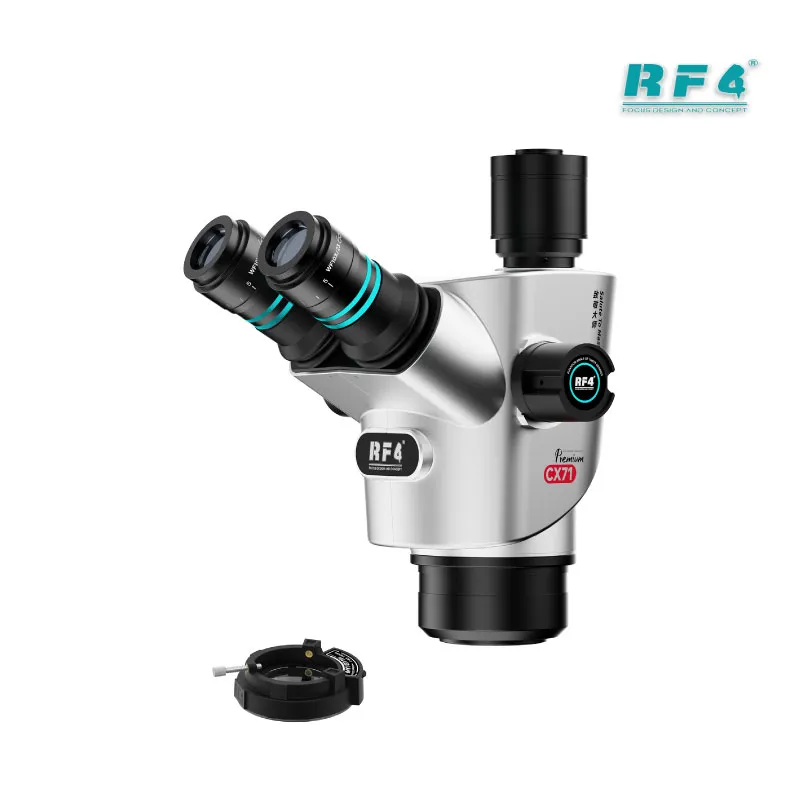
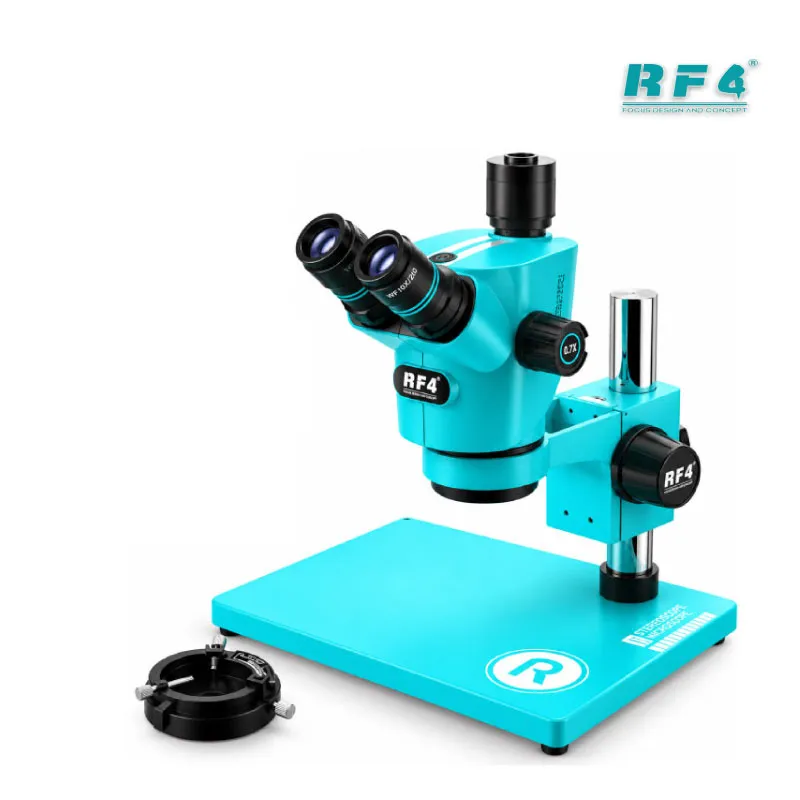
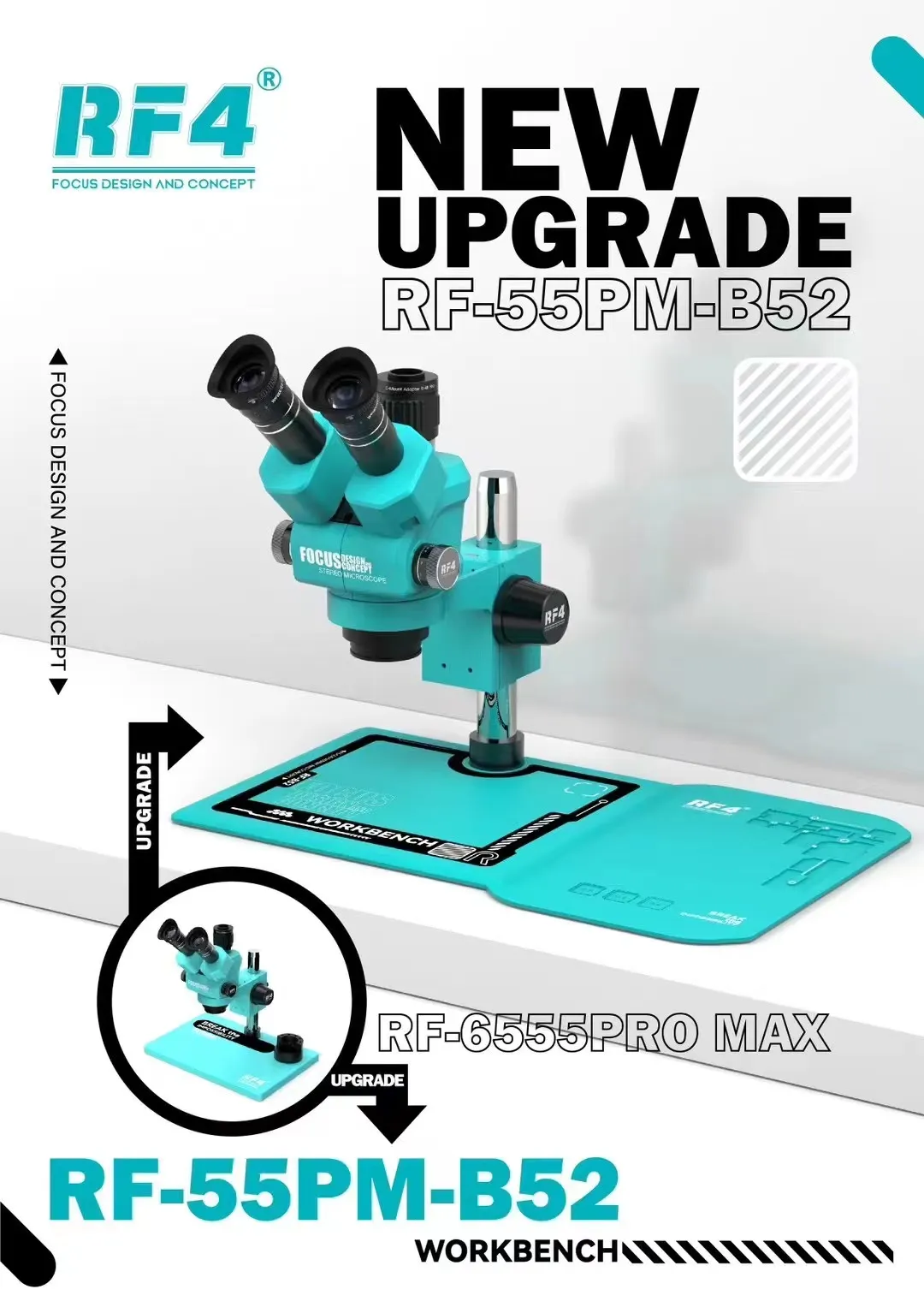
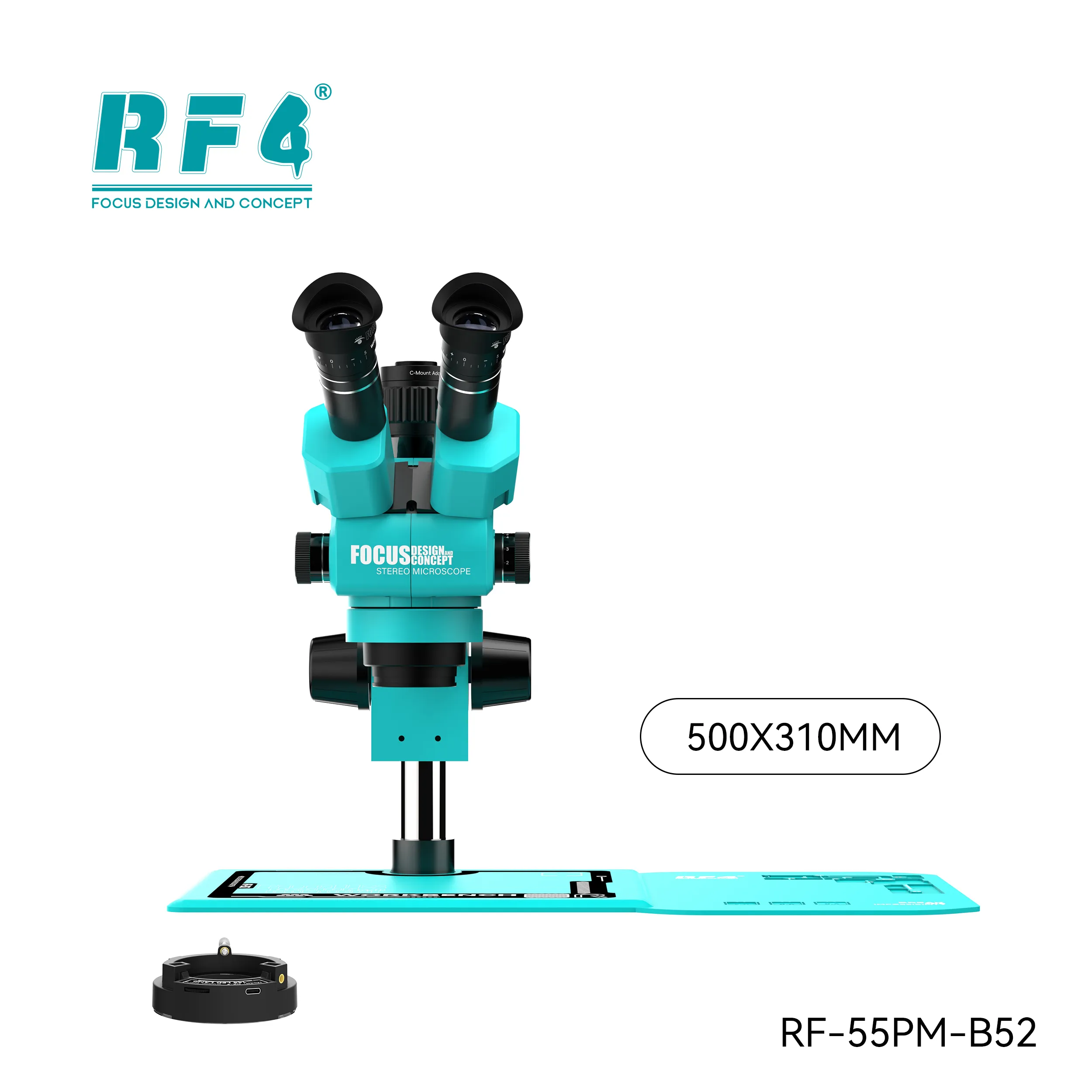
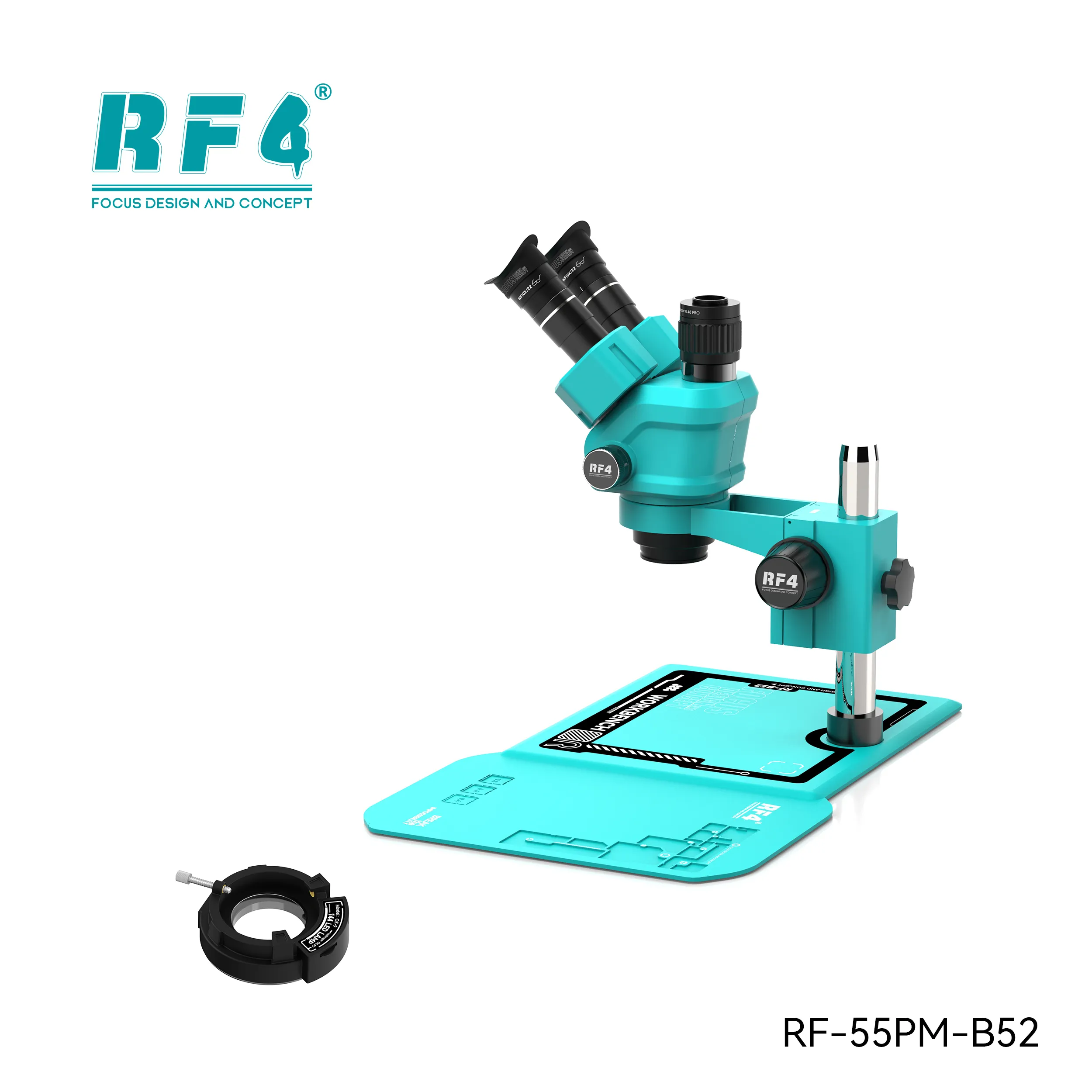
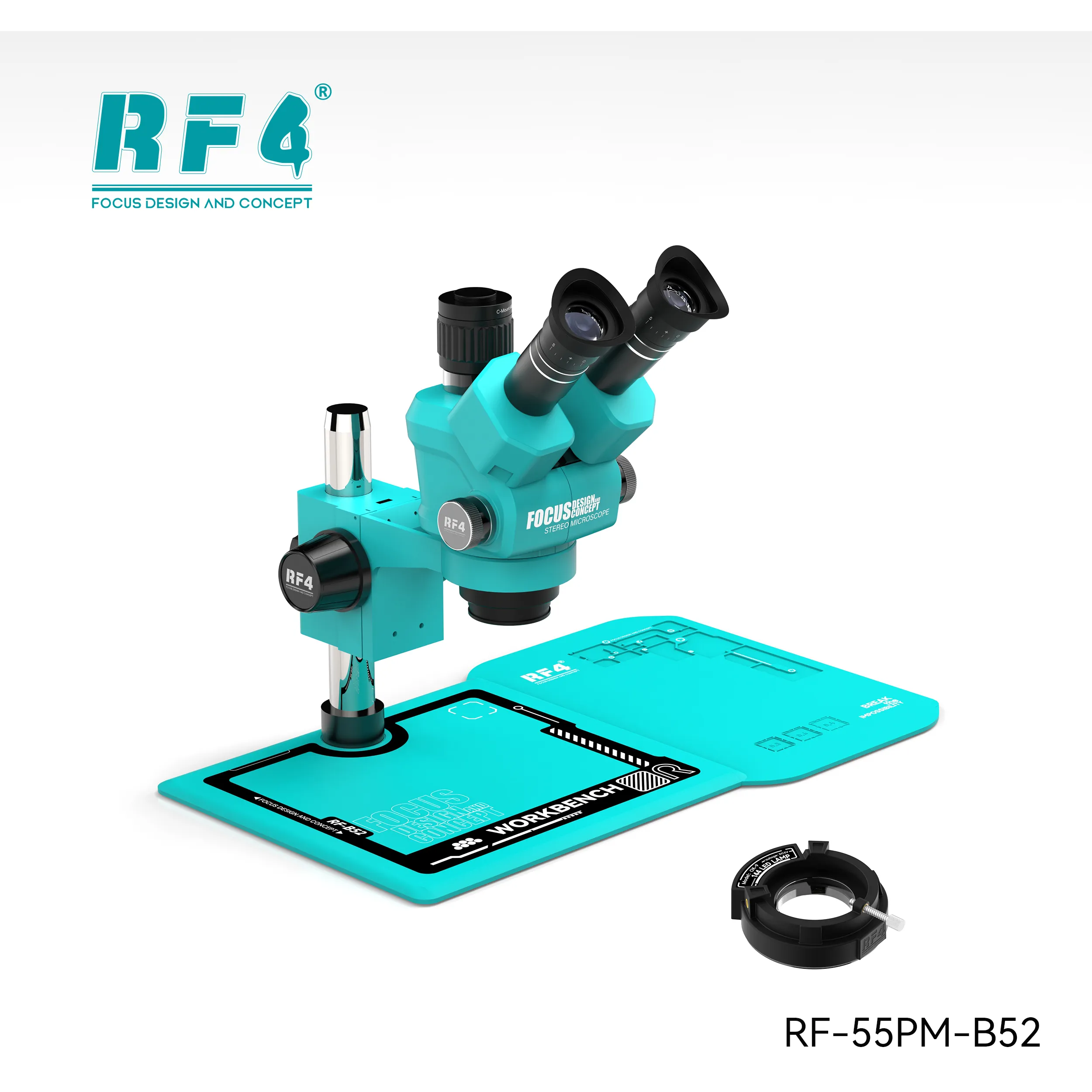
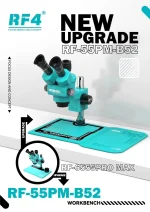
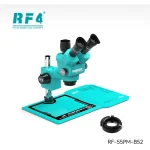
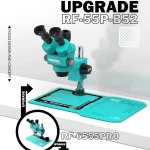
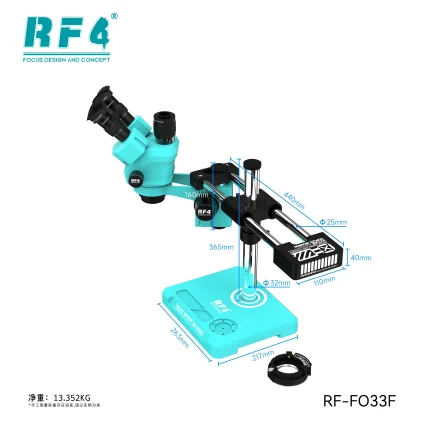
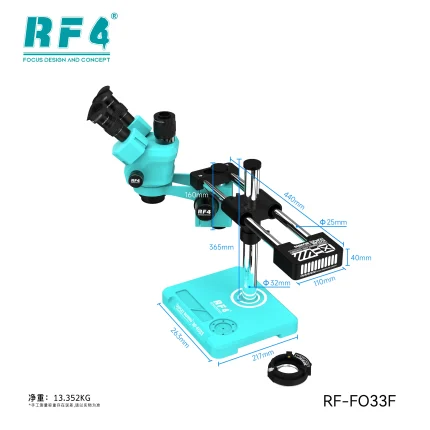
The RF4 RF-55PM-B52 is the top-tier set in the RF4 B52 microscope range. It combines the RF6555PRO MAX trinocular head with the RF-B52 silicone base. You get 6.5X to 55X continuous zoom, a 7-gear zoom lock, adjustable-focus WF10X/22mm eyepieces and a 0.48X CTV port that zooms the monitor in sync with the eyepieces. A 144 LED ring light and a dustproof lens complete the optics. The 310 × 500 mm heat-resistant base carries a built-in metal plate, a screw positioning grid and a magnetic slot. It suits BGA rework, IC change and micro-jumper work.
| Weight | 10.0 kg |
|---|
10 in stock
Description
Long Description:
RF4 Trinocular Stereo Microscope for BGA and Micro-Soldering Work
The RF4 trinocular stereo microscope RF-55PM-B52 is a complete bench set. It pairs the RF6555PRO MAX optical head with the RF-B52 silicone work base. You get 6.5X to 55X continuous zoom, a trinocular camera port with a 0.48X CTV, a 144 LED ring light and a 310 × 500 mm heat-resistant pad. This is the highest variant in the RF-55-B52 series. It adds a 7-gear zoom lock and adjustable-focus eyepieces over the entry models. Board-level repair starts with what you can see. A cracked BGA joint, a shorted 0201 capacitor or a lifted pad decides the job, and this set puts those details in sharp view.
RF6555PRO MAX Head: A 6.5-55X Stereo Microscope Zoom Path
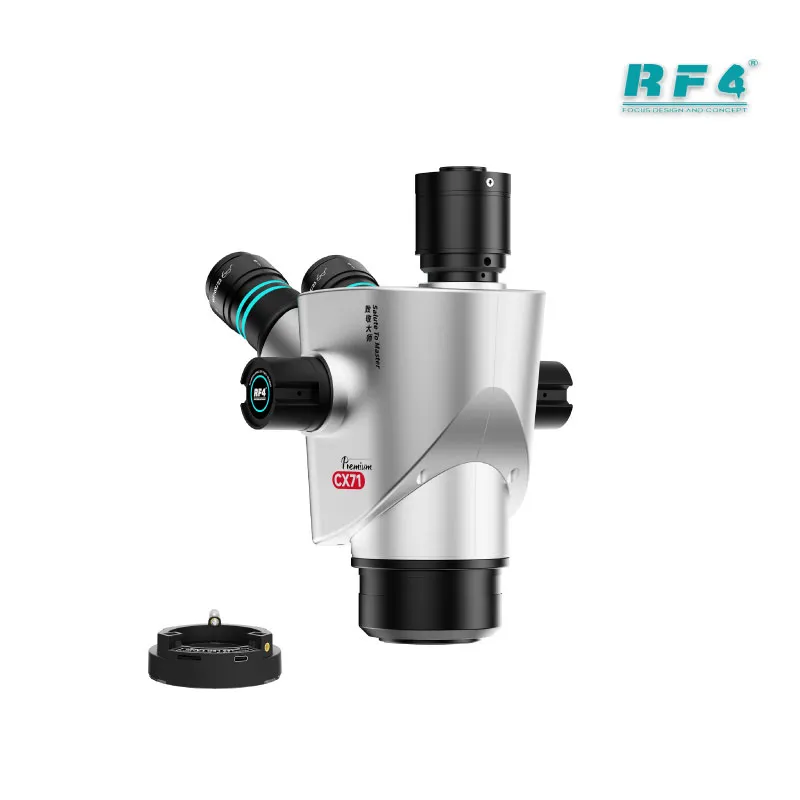
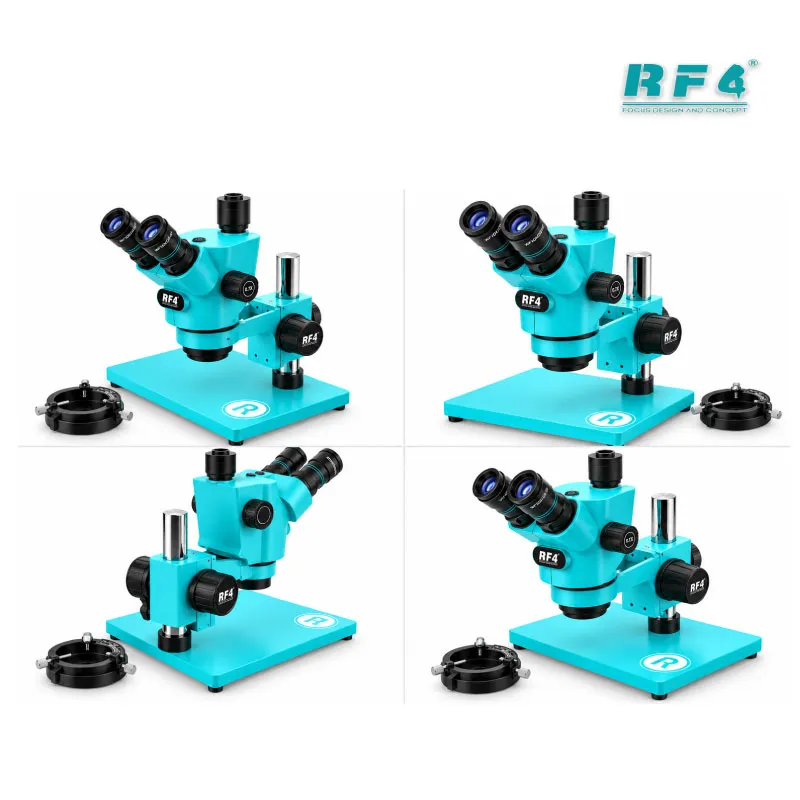
The head uses a 45-degree inclined, 360-degree swiveling trinocular body. You rotate it toward any side of the bench without moving the base. The 6.5-55X stereo microscope zoom covers the full working range of phone repair. At 6.5X you see the entire logic board and plan your heat zones. At 55X you read component markings and check individual solder balls under a BGA edge. Stereo optics give you real depth perception. You judge iron tip height, tweezer position and solder fillet shape with both eyes, which a flat camera image cannot match.
The WF10X/22mm eyepieces carry adjustable focus. You correct each eye separately, so both eyes land on the same focal plane. That matters over a full shift. Uneven focus forces your eyes to compensate, and strain builds fast during long rework sessions. A dustproof lens shields the objective from flux smoke and solder spatter. It keeps the main optics clean and protects image quality over years of daily use.
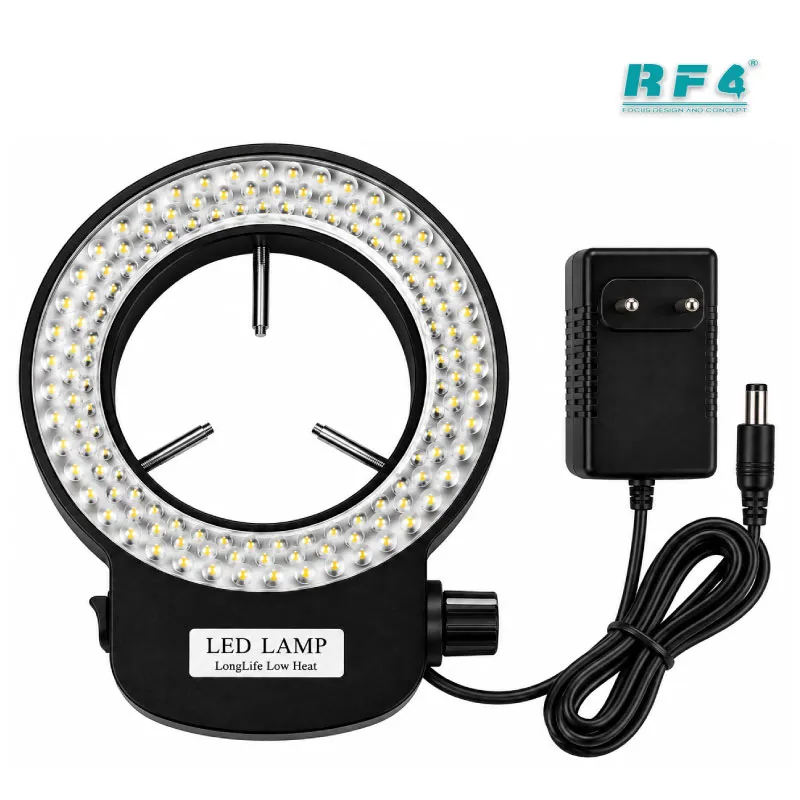
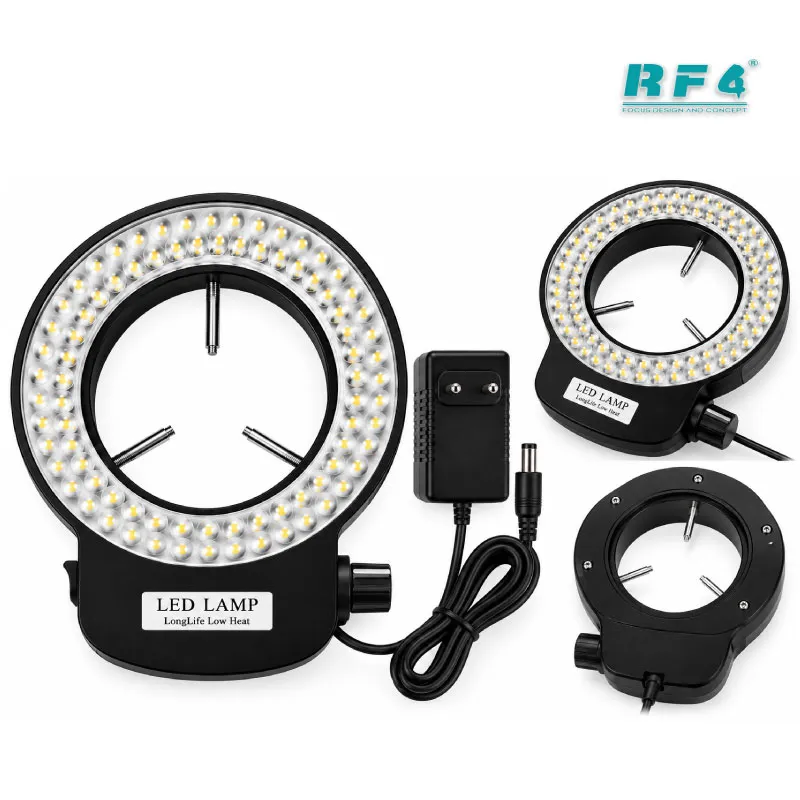
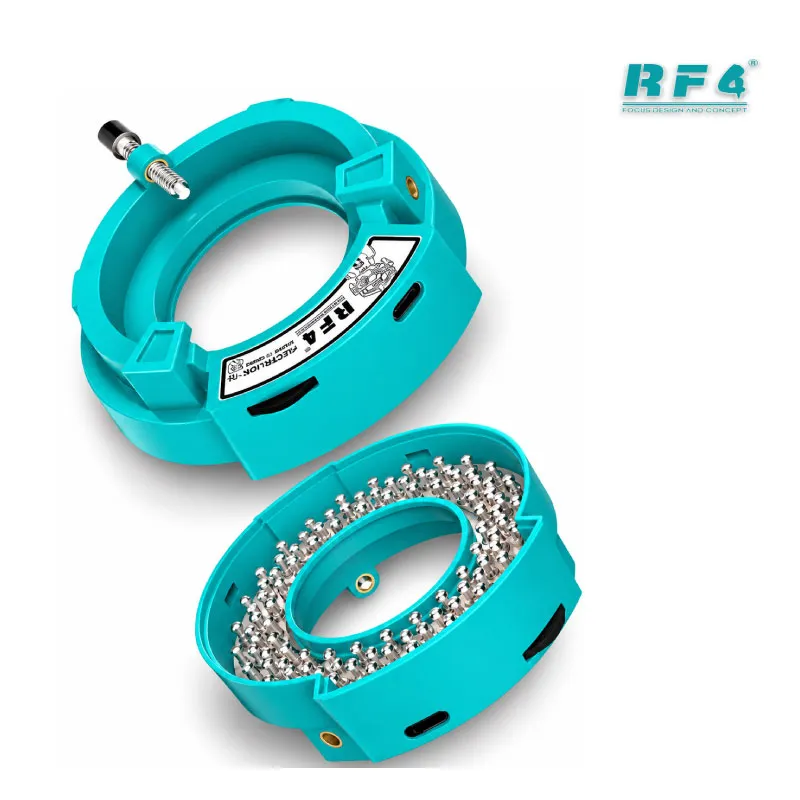
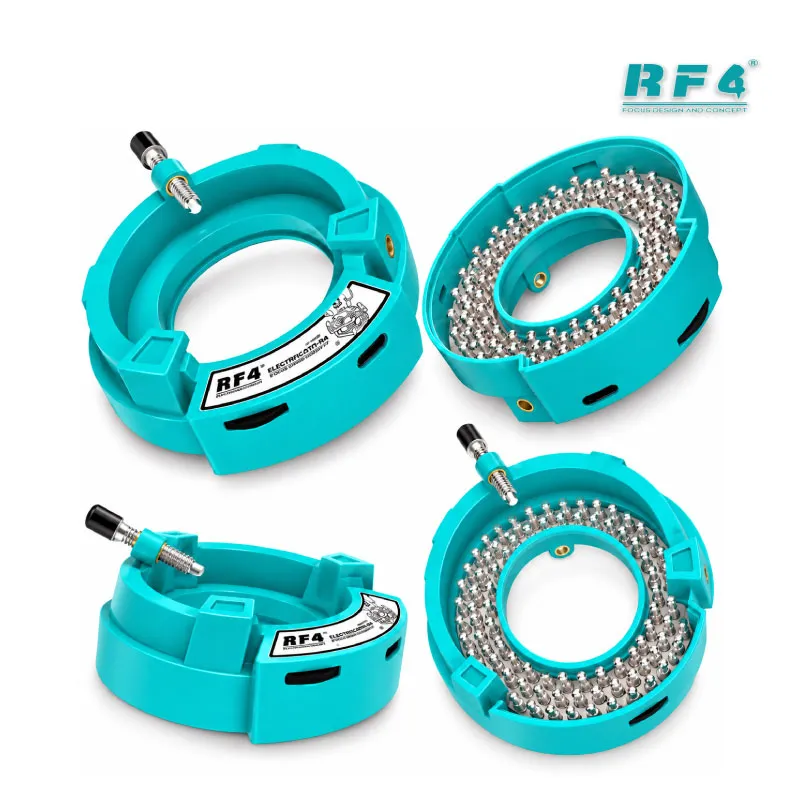
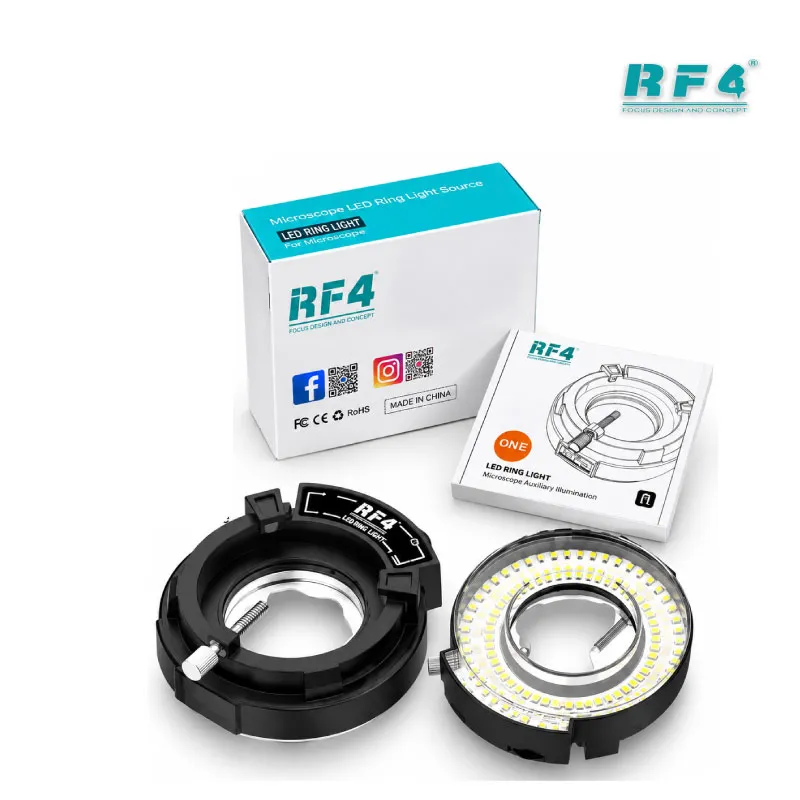
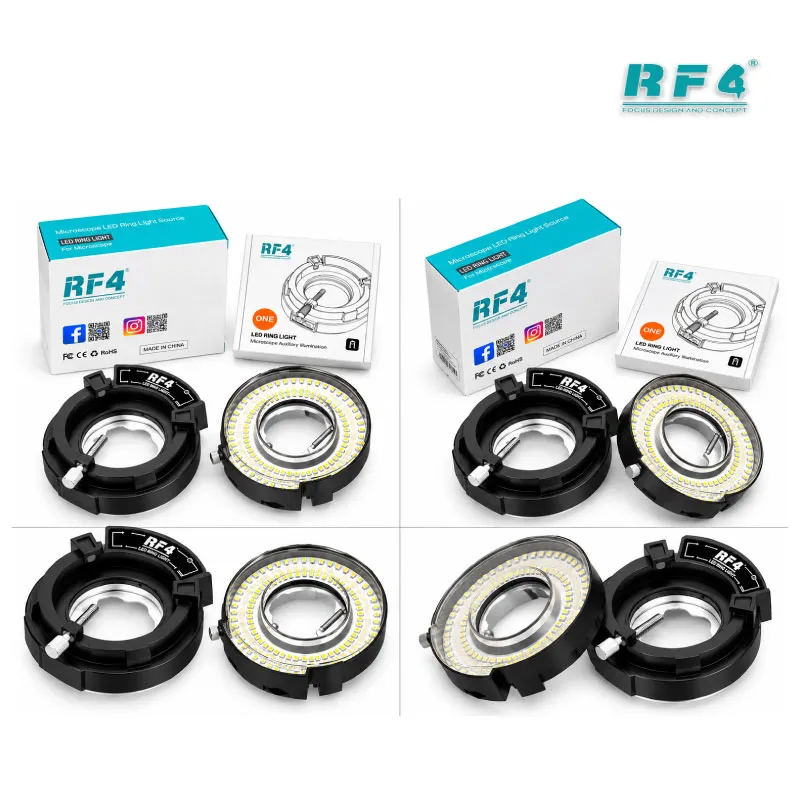
The 144 LED ring light mounts around the objective and lights the board evenly from every side. Shadow-free light matters under shields and around tall components, where a single desk lamp leaves dark zones. You adjust brightness to cut glare off polished chip surfaces and bare copper. Even lighting also gives the camera a clean, true-colour image.
7-Gear Zoom Lock and Limit Lock Control
Continuous zoom is fast, but it drifts. The RF-55PM-B52 solves this with a 7-gear zoom lock knob. Each gear stops at a fixed magnification step. You zoom out to locate a component, then click back to the exact working magnification without hunting for it. Your hand-eye coordination stays calibrated because the image scale never shifts between steps.
The limit lock holds the working height you set on the stand. You lift the head to swap a board or load a PCB holder, then return straight to focus. During IC change karna on a CPU or PMIC, this saves time on every reposition. Combined with the gear lock, the head behaves the same way every time you sit down. That consistency separates a precision tool from a general magnifier.
CTV Port and Synchronous Monitor View
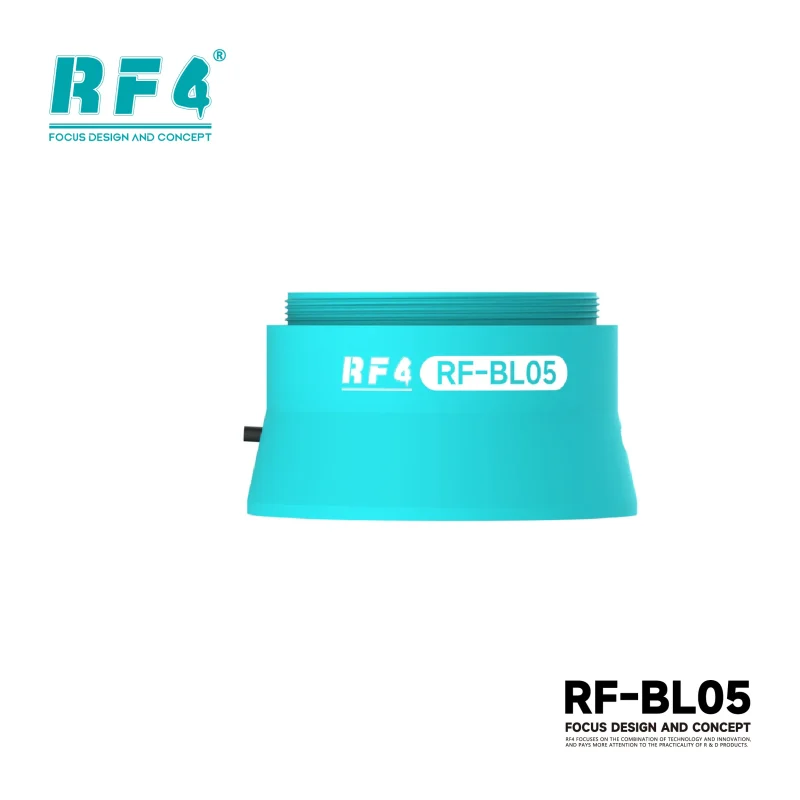
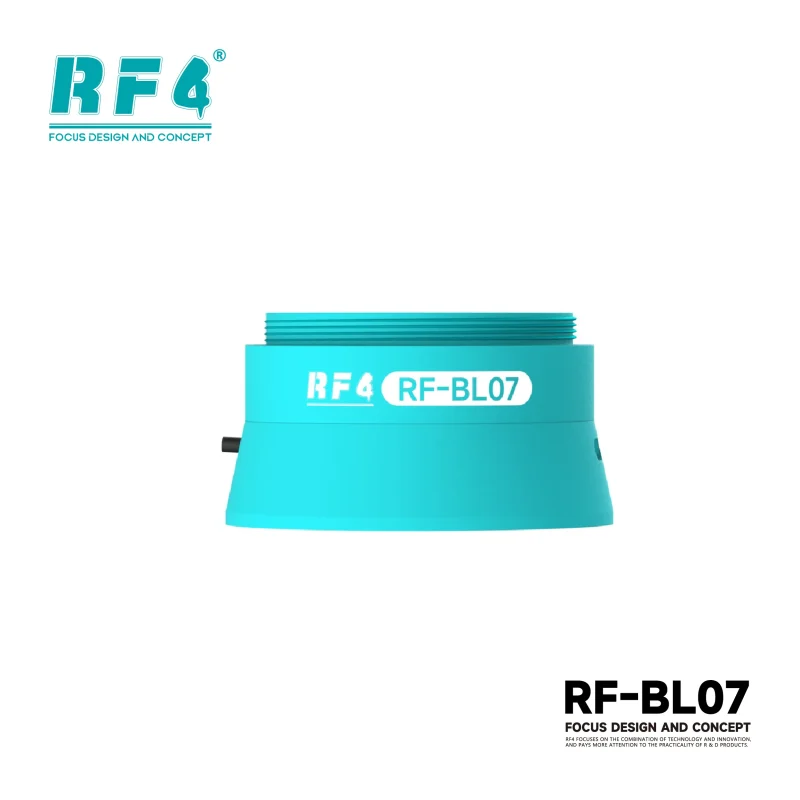
The trinocular port carries a 0.48X CTV adapter. Monitor and eyepiece zoom in sync, so the camera image follows the magnification you see through the eyepieces. You do not refocus the camera after every zoom change. The 0.48X ratio gives the camera sensor a wider field than a standard 0.5X adapter. You keep more of the board on screen at high zoom.
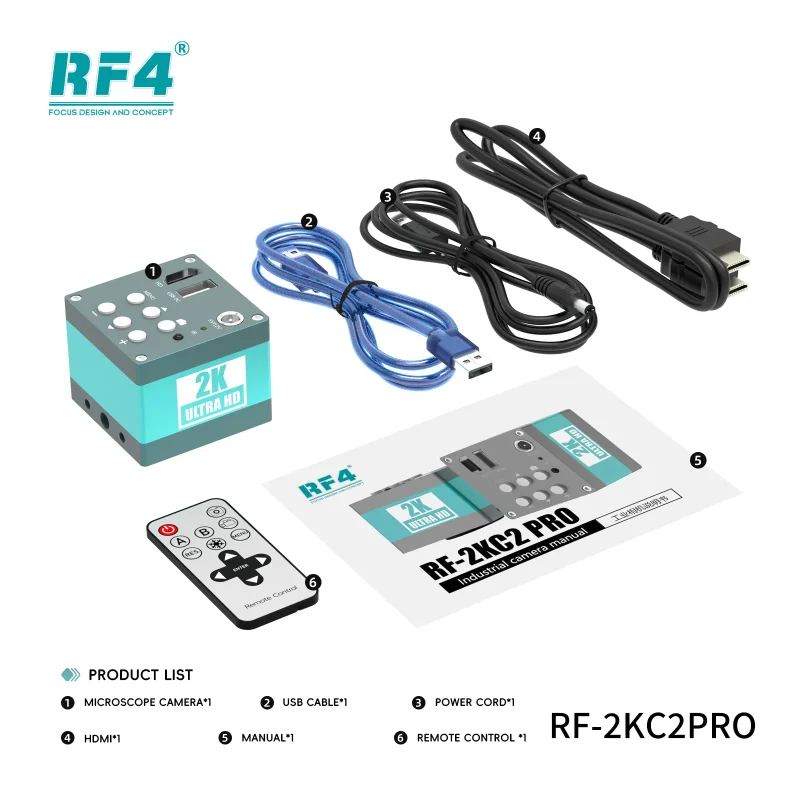
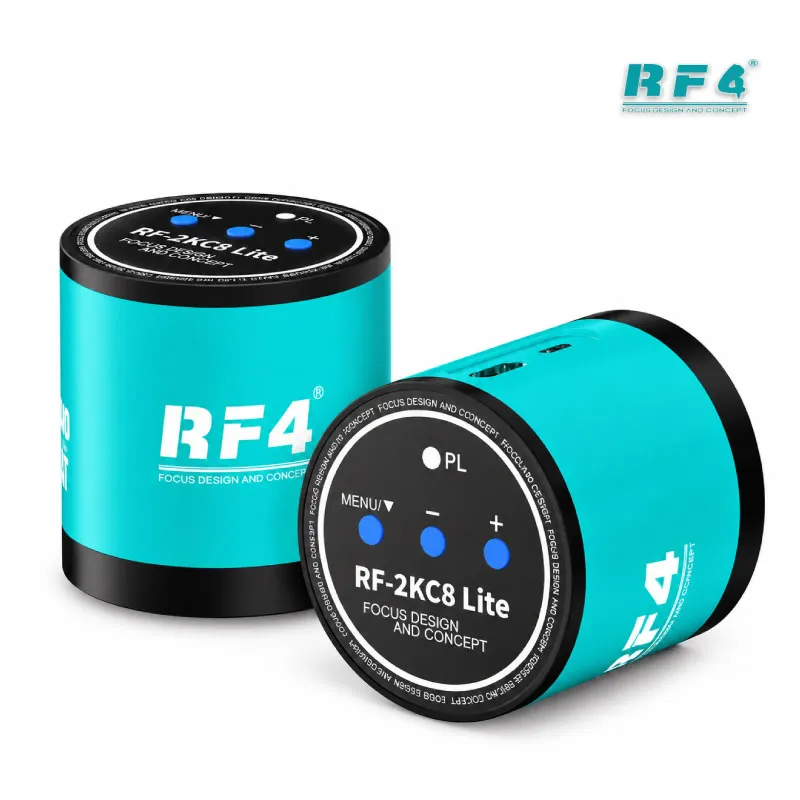
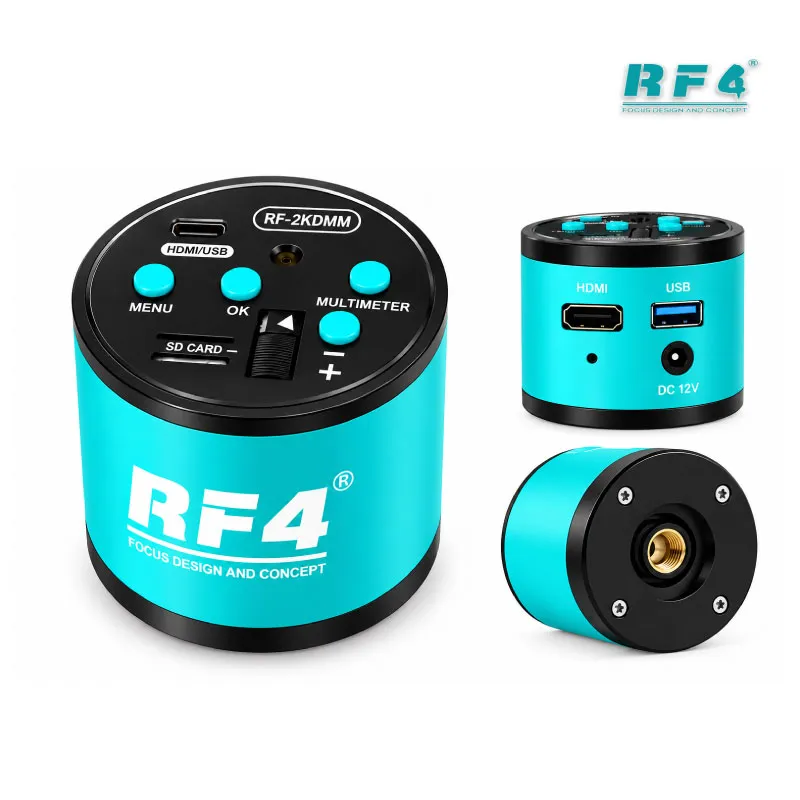
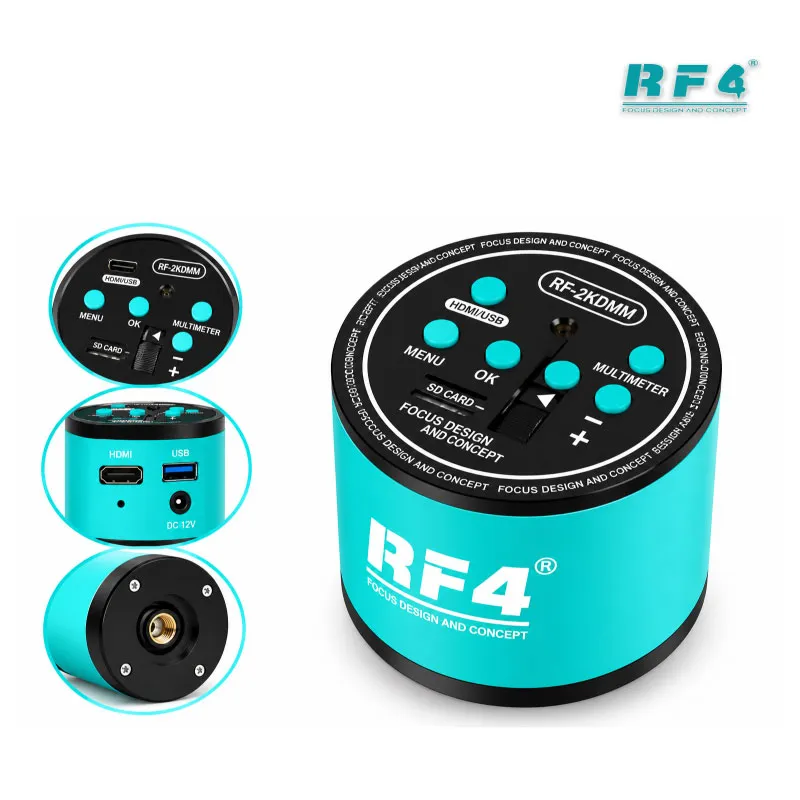
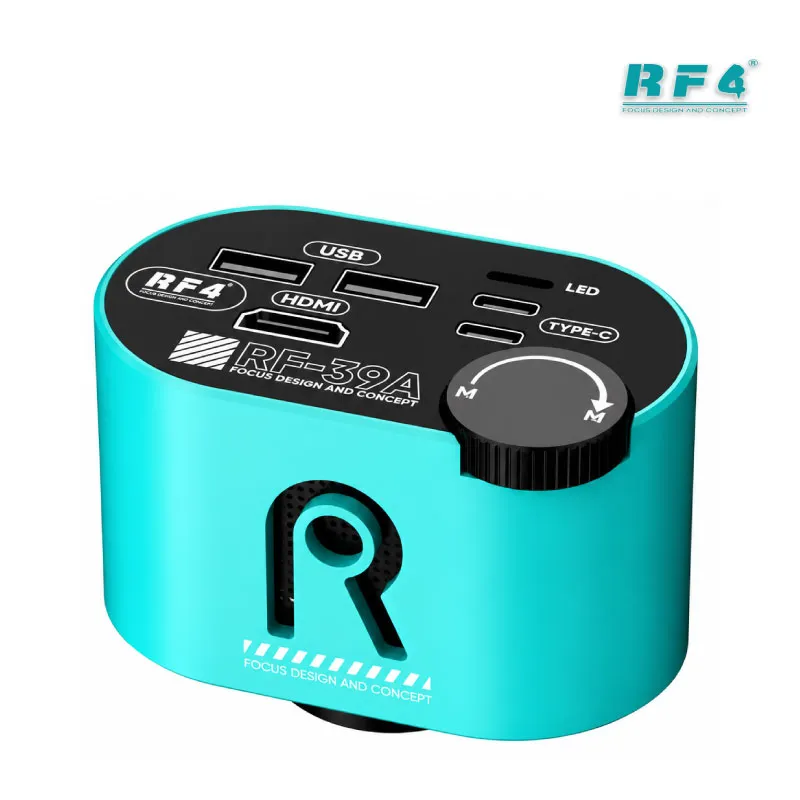
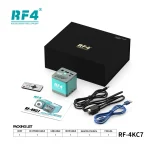
Pair the port with your own HDMI microscope camera and a monitor. You record repairs for training, show a customer the corroded connector before you quote, or guide a junior technician through a jumper lagana job in real time. Shops running video content for social media use this port to film close-up rework without extra rigs.
RF-B52 Base: Silicone Pad, Metal Plate and Magnetic Slot
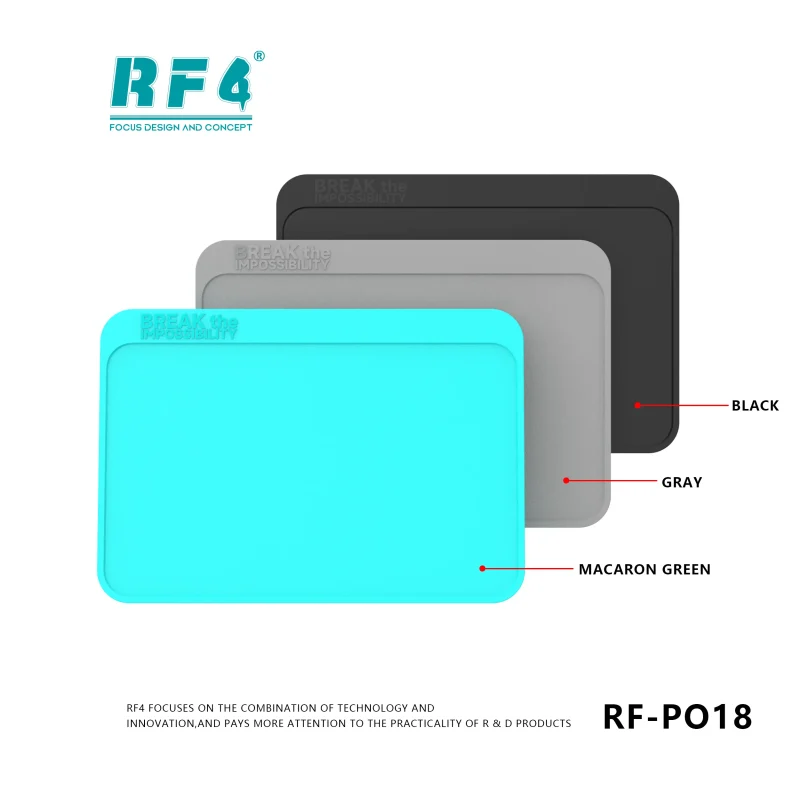
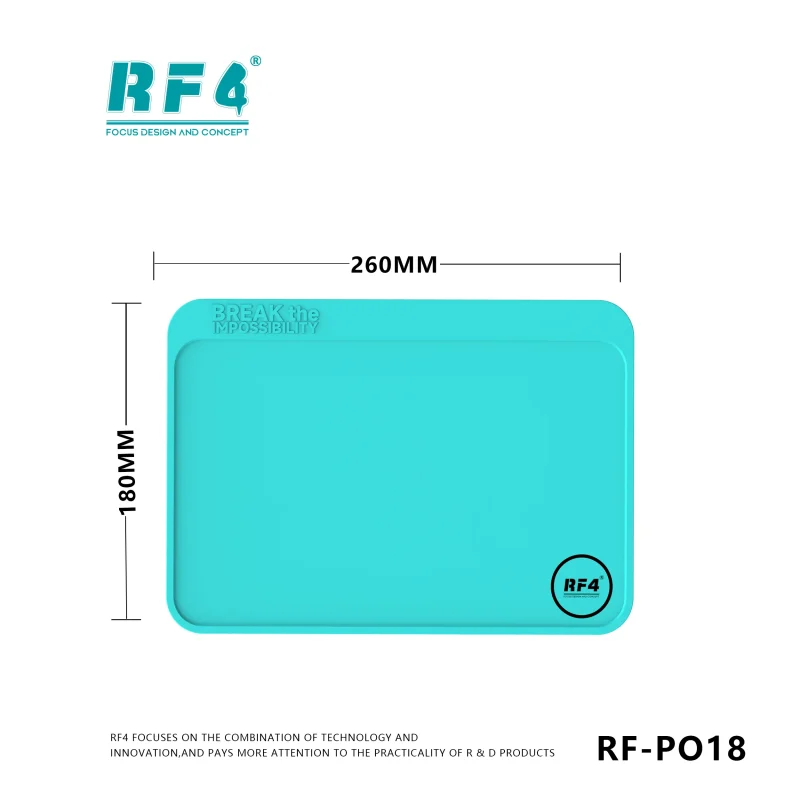
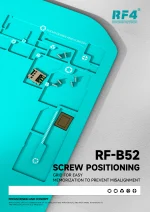
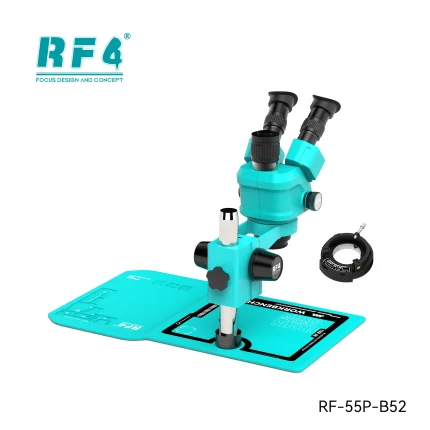
The RF-B52 base measures 310 × 500 mm. That surface holds the microscope, a PCB holder, a disassembled phone and your hand tools at the same time. The silicone resists high temperature, so hot air flow and dropped iron tips do not burn through it. A built-in metal plate adds rigidity and weight. The base stays flat and steady under the stand, which keeps the image stable at 55X where small vibrations show.
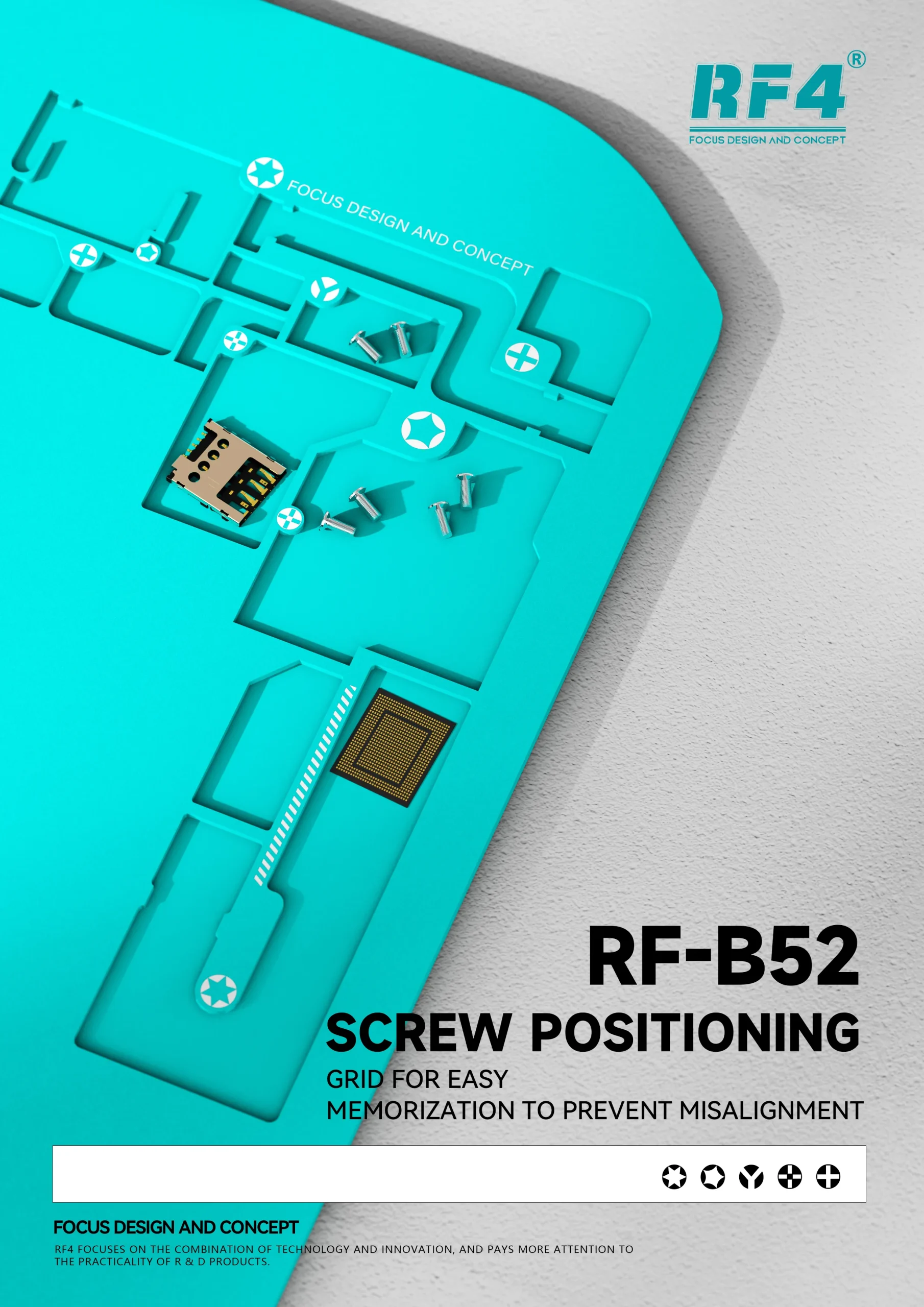
A screw positioning grid lets you lay out screws in teardown order. On phones with mixed screw lengths, a wrong screw in the wrong hole damages the board or display. The grid prevents that mistake. A magnetic slot holds small steel parts and tools in place, so tweezers and shields stay where you put them during a long job.
BGA Repair Microscope in Your Repair Workflow
This BGA repair microscope supports every hardware stage after diagnosis. Start with inspection. On a dead phone, you check for shorted capacitors, burnt components and corrosion from water damage. For a charging issue, you inspect the charging IC and connector pins. For a network issue or display problem, you trace damaged lines and lifted pads around the RF section or display connector.
Rework follows. You remove and fit BGA chips with your hot air station, then confirm alignment and ball wetting under zoom. For reballing, you inspect the stencil fit and ball uniformity before reflow. On CPU and eMMC reballing, you check every ball row before the chip goes back on the board. Jumper work on broken traces needs high magnification and steady depth perception, and the stereo head delivers both. After the fix, you inspect for solder bridges and residual flux before power-on.
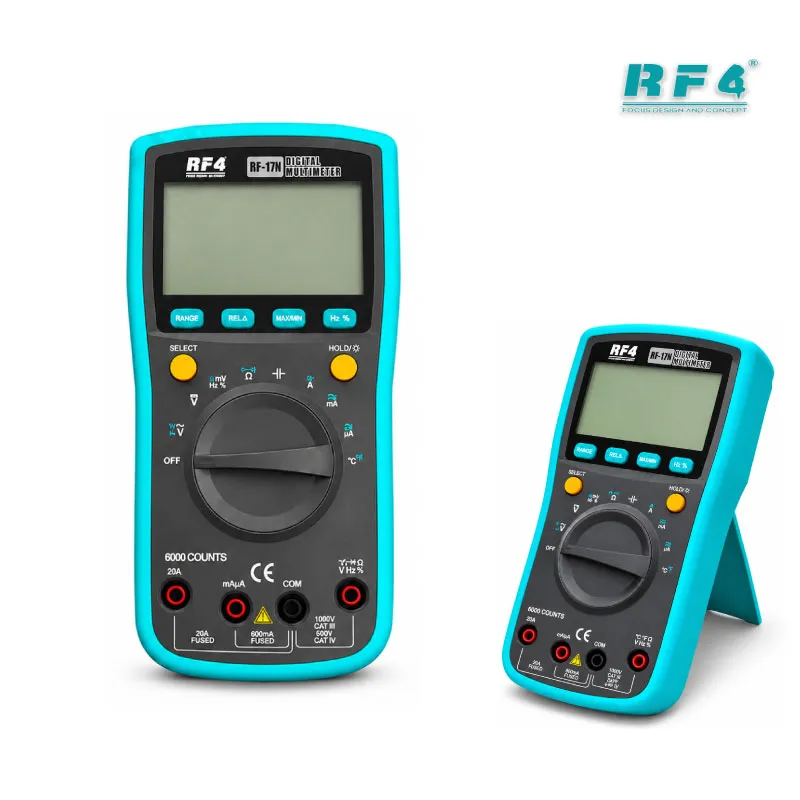
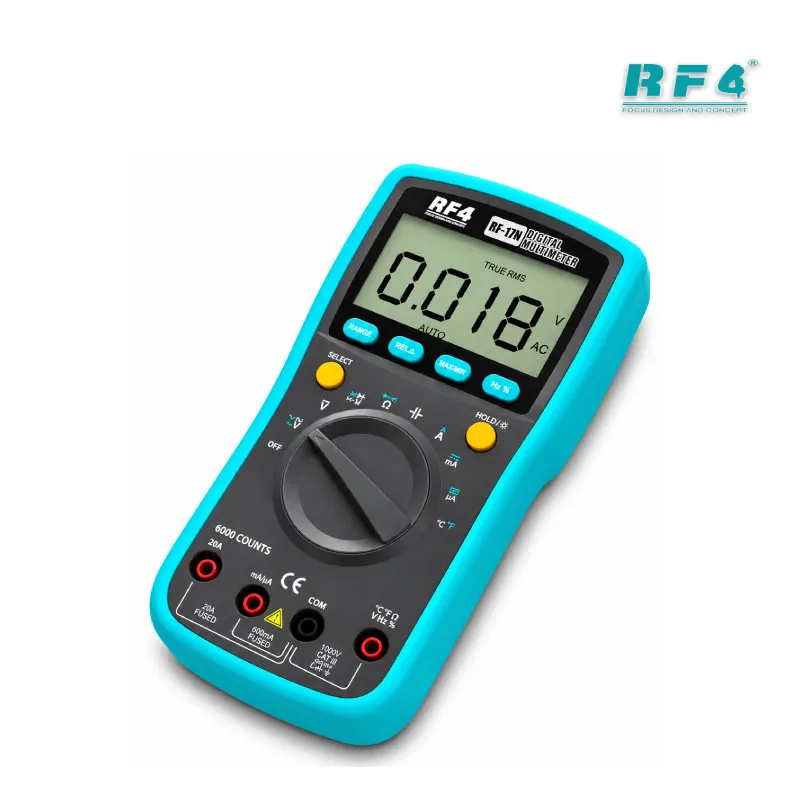
Build the bench around it. A hot air station and soldering station handle heat. Reballing kits and stencils handle BGA prep. PCB holders fix the board under the lens. A multimeter confirms shorts and continuity before and after the job. For an upgrade path, add an HDMI microscope camera and a dedicated monitor to the CTV port. You turn the set into a full inspection and recording station.
Choosing the RF-55PM-B52 Over Other B52 Variants
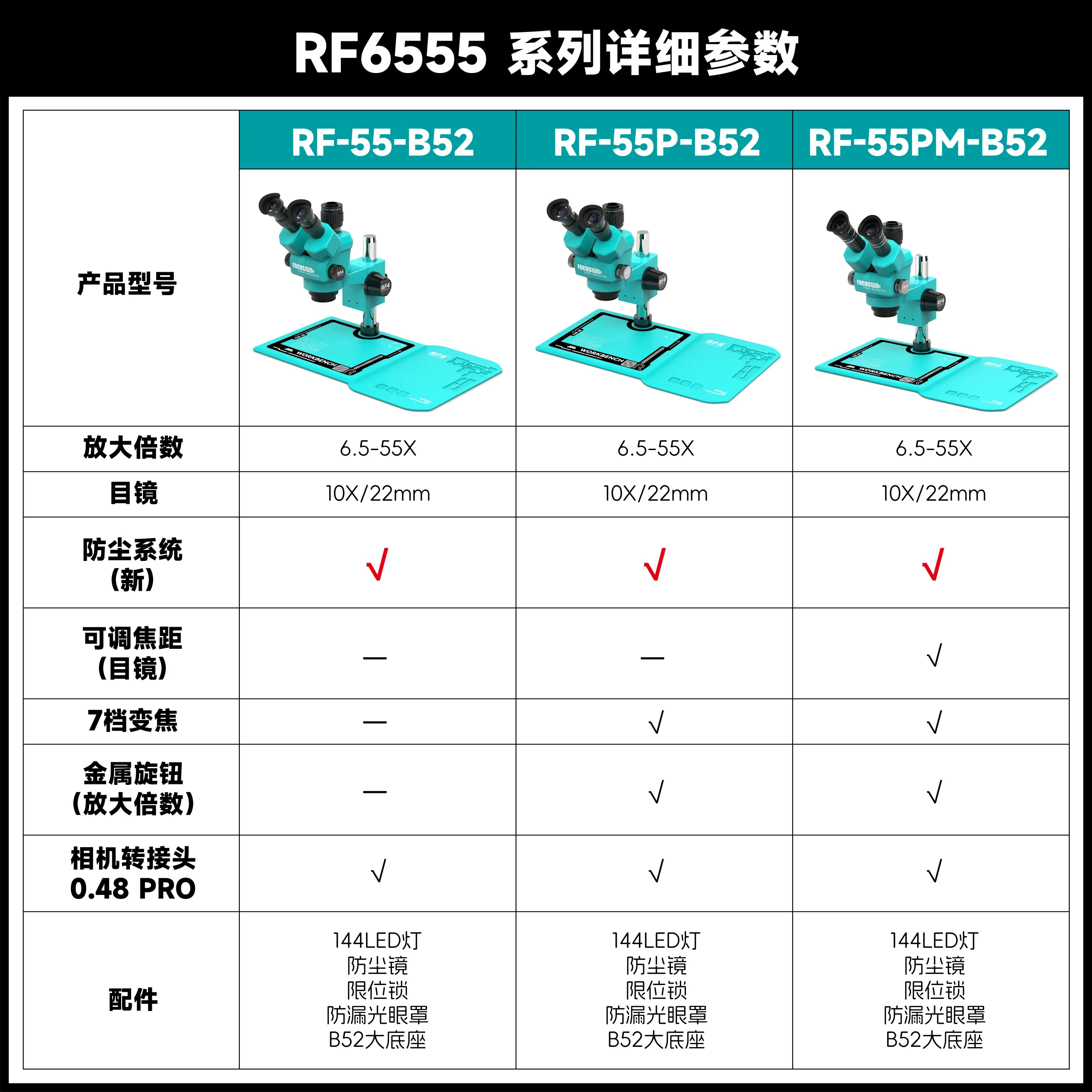
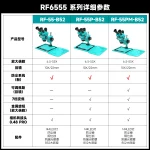
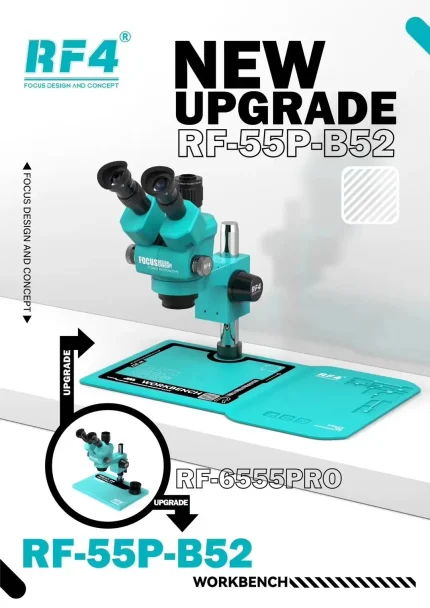
The RF-55-B52 series ships in three variants on the same base. The RF-55-B52 uses the RF6555TVP head. The RF-55P-B52 uses the RF6555PRO head and adds the 7-gear zoom. The RF-55PM-B52 uses the RF6555PRO MAX head and adds adjustable-focus eyepieces on top of the gear zoom. All three share the same 0.48X CTV, 144 LED ring and RF-B52 base, so the upgrade sits entirely in the head and eyepieces. If you spend hours under the microscope every day, the PRO MAX configuration gives you the most control and the least eye strain. For a professional micro-soldering bench, it is the variant to choose.
Reviews (0)
Q & A
Please login to post questions
Key Features
- 6.5X–55X synchronous continuous zoom trinocular stereo head
- 45-degree inclined, 360-degree swiveling trinocular body
- 7-gear zoom lock knob for repeatable magnification steps
- WF10X/22mm eyepieces with adjustable focus
- 0.48X CTV adapter with synchronous monitor and eyepiece zoom
- 144 LED ring light with dustproof objective lens
- Limit lock to hold your working height
- RF-B52 310 × 500 mm heat-resistant silicone base with built-in metal plate, screw positioning grid and magnetic slot
Specifications
| 6.5X–55X synchronous continuous zoom trinocular stereo head | |
|---|---|
| 45-degree inclined, 360-degree swiveling trinocular body | |
| 7-gear zoom lock knob for repeatable magnification steps | |
| WF10X/22mm eyepieces with adjustable focus | |
| 0.48X CTV adapter with synchronous monitor and eyepiece zoom | |
| 144 LED ring light with dustproof objective lens | |
| Limit lock to hold your working height | |
| RF-B52 310 × 500 mm heat-resistant silicone base with built-in metal plate, screw positioning grid and magnetic slot |
Common Repair Uses
- BGA chip removal, placement and alignment checks
- CPU, eMMC and PMIC reballing inspection
- IC change karna on power, charging and audio ICs
- Jumper lagana on broken traces and lifted pads
- Short-circuit and burnt component tracing on dead phones
- Water damage and corrosion inspection
- Charging connector and display connector pin repair
- Post-repair checks for solder bridges and flux residue
Compatible Devices
- iPhone logic boards, including stacked sandwich boards
- Samsung Galaxy motherboards
- Xiaomi, Redmi and Poco boards
- Oppo, Vivo and Realme boards
- Infinix and Tecno boards
- Tablet and iPad motherboards
- Smartwatch and wearable PCBs
- HDMI/USB microscope cameras via the 0.48X CTV port
FAQ
What is the product name?
The product name is RF4 RF-55PM-B52 Trinocular Stereo Microscope.
What is the brand of this product?
The brand of this product is RF4.
What is the model of this product?
The model of this product is RF-55PM-B52, which uses the RF6555PRO MAX microscope head.
What is this product used for?
This product is used for mobile PCB inspection, BGA rework, reballing, IC replacement and jumper wiring under 6.5X to 55X magnification.
Which devices are compatible with this product?
This product is compatible with any mobile phone, tablet or small electronics PCB, as it is a universal inspection tool and not device-specific.
Who should use this product?
This product is suitable for mobile repair technicians, repair shops, service centers, and professional users.
What is the difference between RF-55PM-B52, RF-55P-B52 and RF-55-B52?
All three share the RF-B52 base, 0.48X CTV and 144 LED ring. The RF-55-B52 uses the RF6555TVP head, the RF-55P-B52 uses the RF6555PRO head with a 7-gear zoom, and the RF-55PM-B52 uses the RF6555PRO MAX head with the 7-gear zoom plus adjustable-focus eyepieces.
Can I connect a camera and monitor to the RF4 RF-55PM-B52 microscope?
Yes. The trinocular port carries a 0.48X CTV adapter, and you can mount an HDMI or USB microscope camera on it. The monitor image and the eyepiece view zoom in sync, so you do not refocus the camera after each zoom change.

Reviews
There are no reviews yet.