






























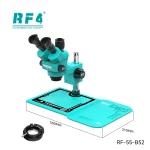

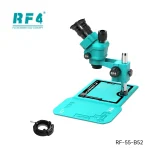
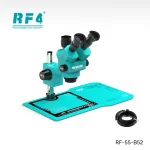
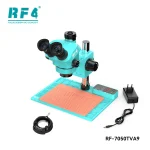
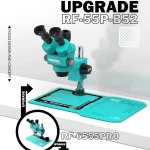
RF4 RF-55-B52 Pro Max Trinocular Stereo Microscope
₨80,000
RF4 RF6555 Pro Max for Micro Soldering
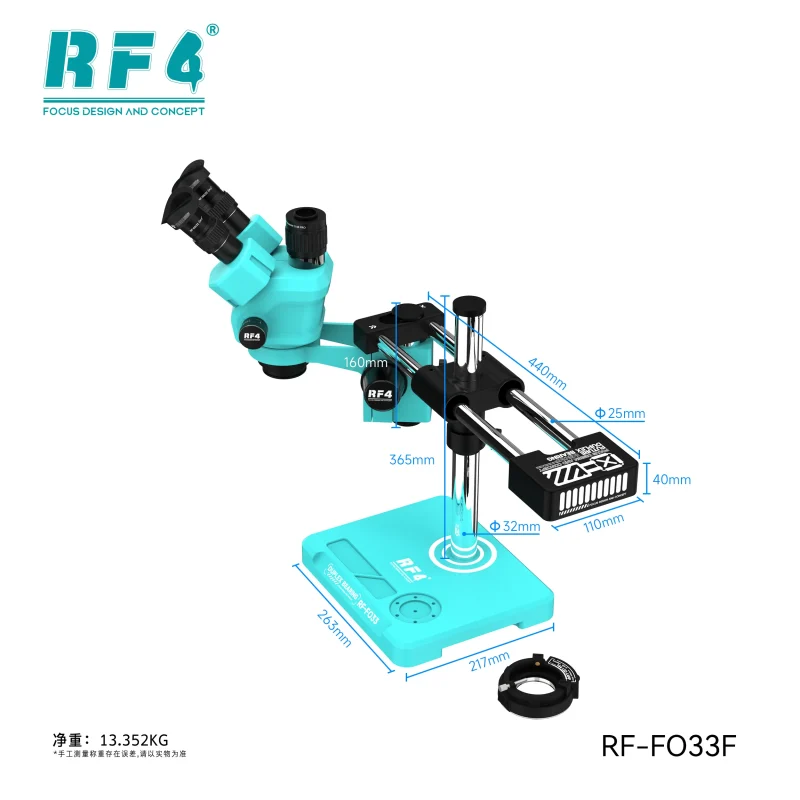
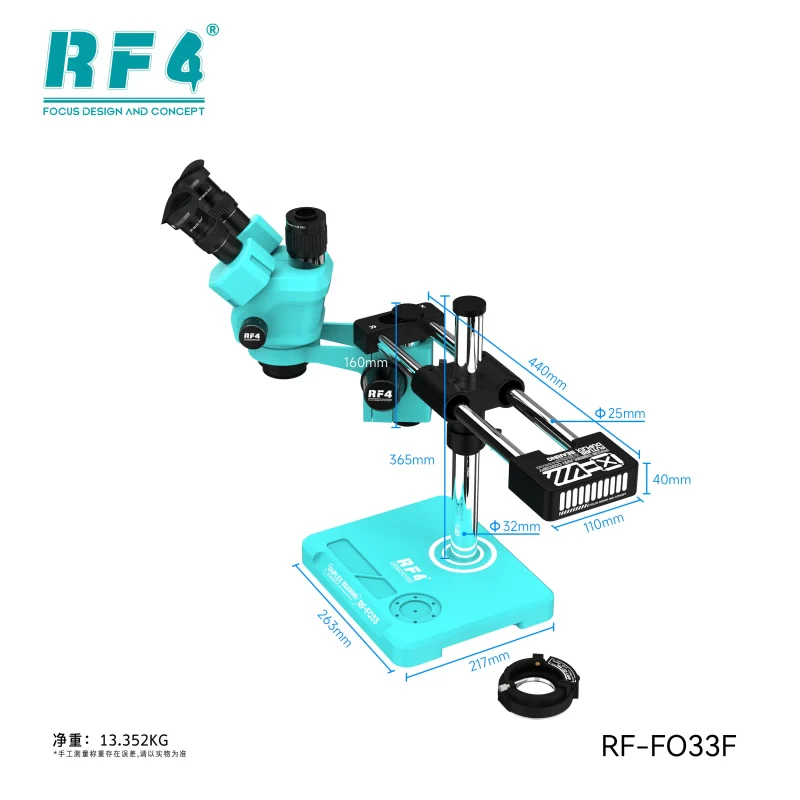
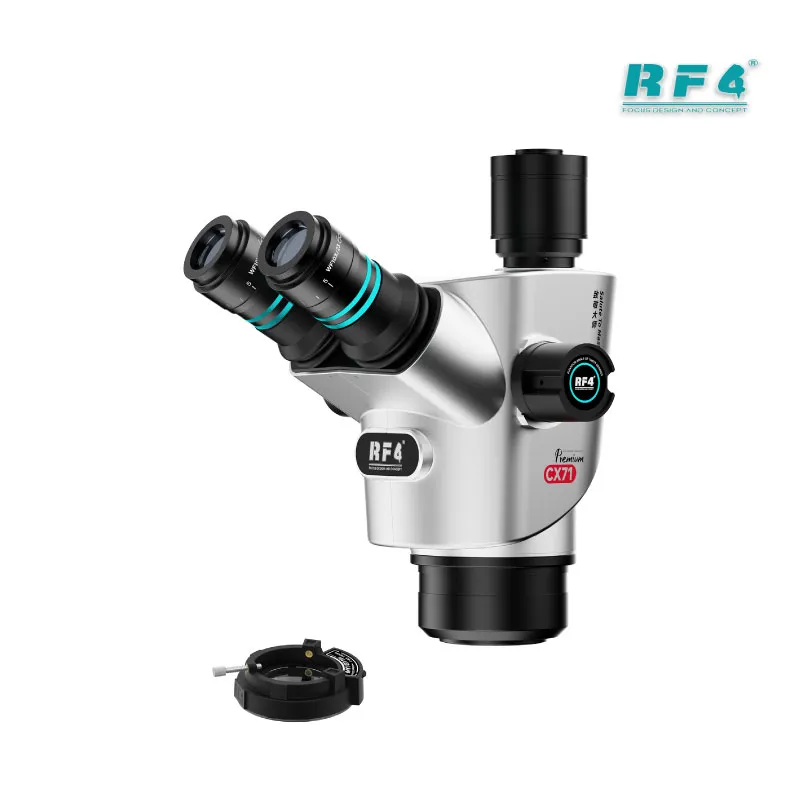
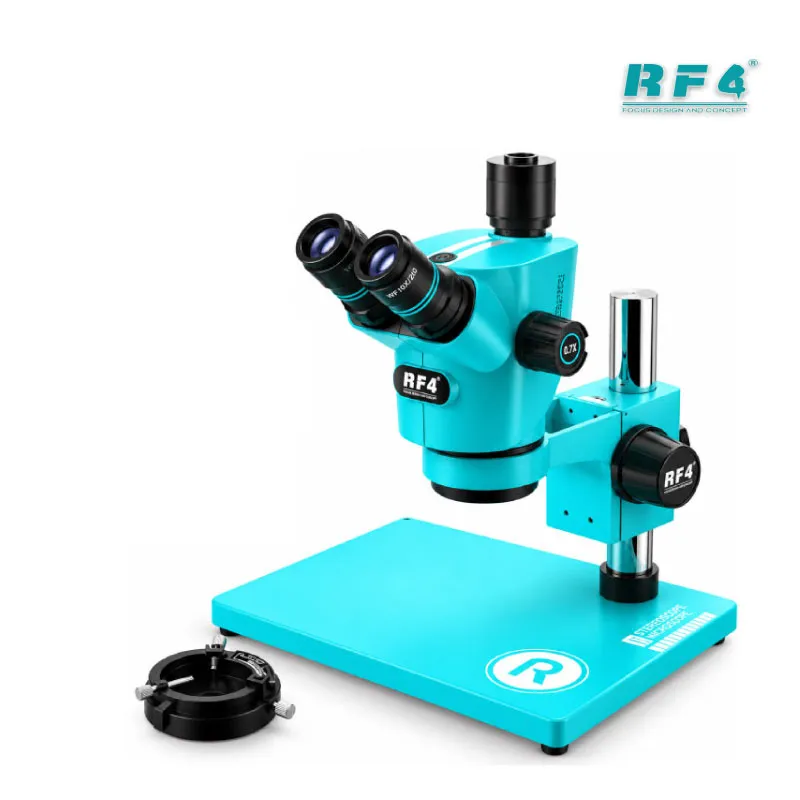
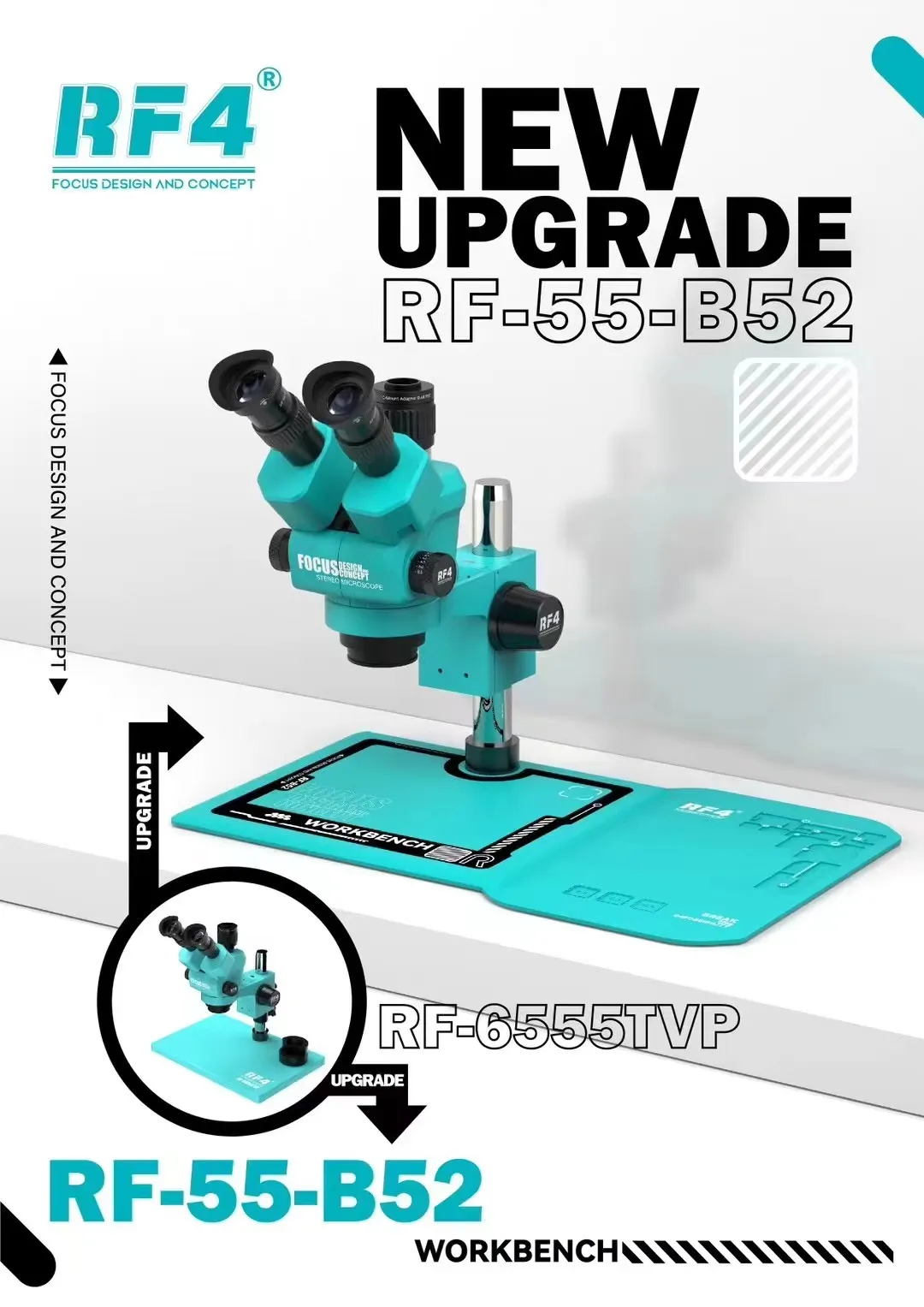
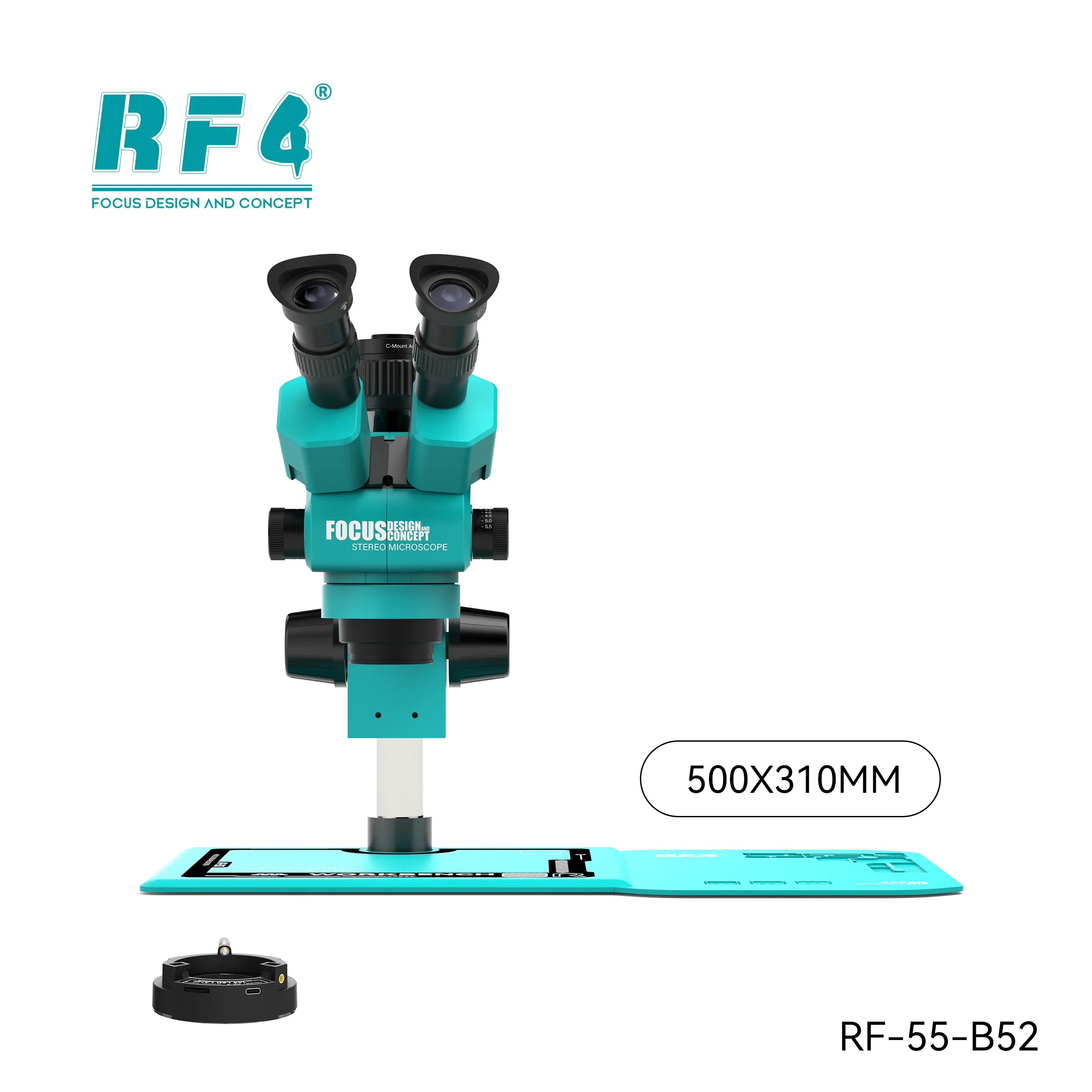
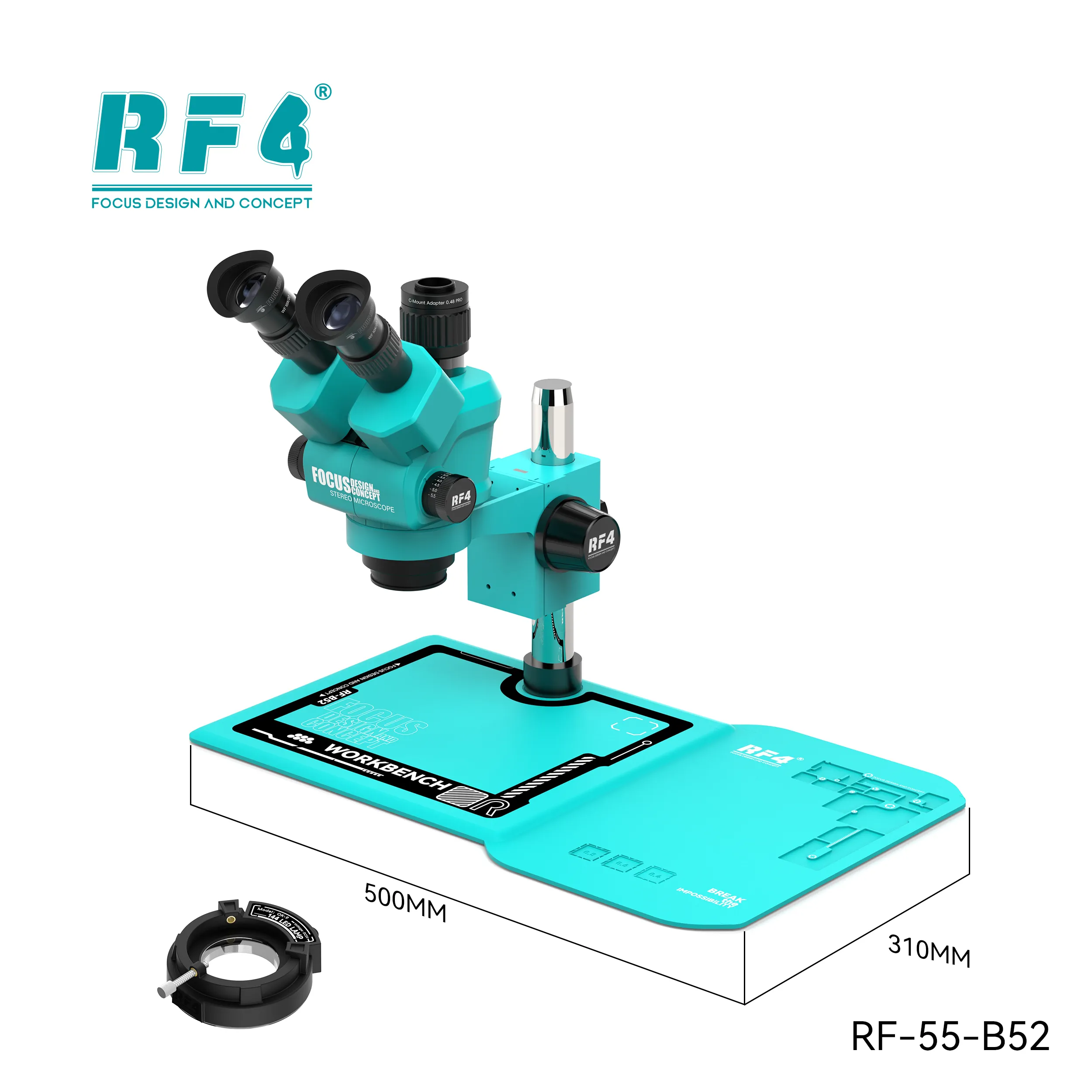
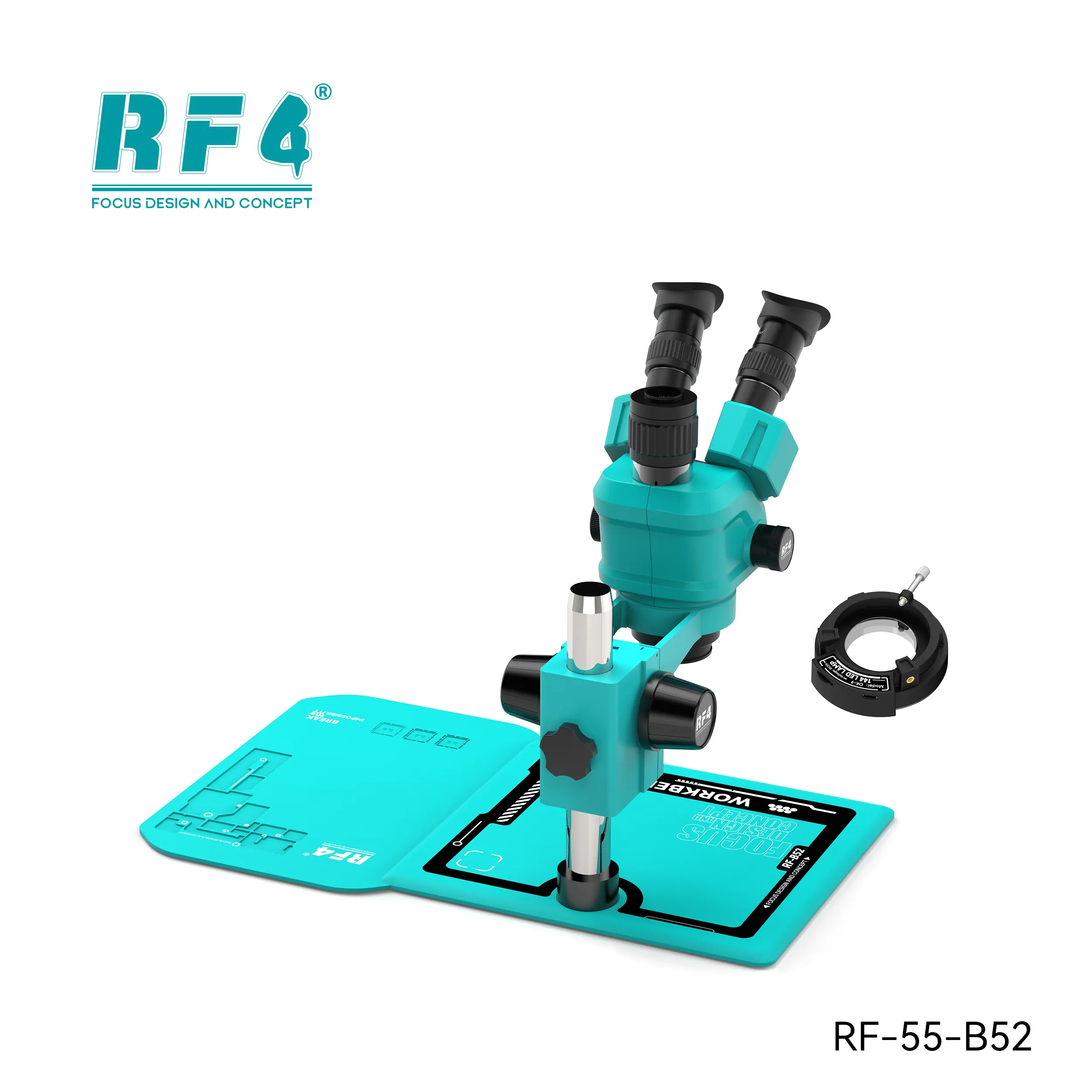
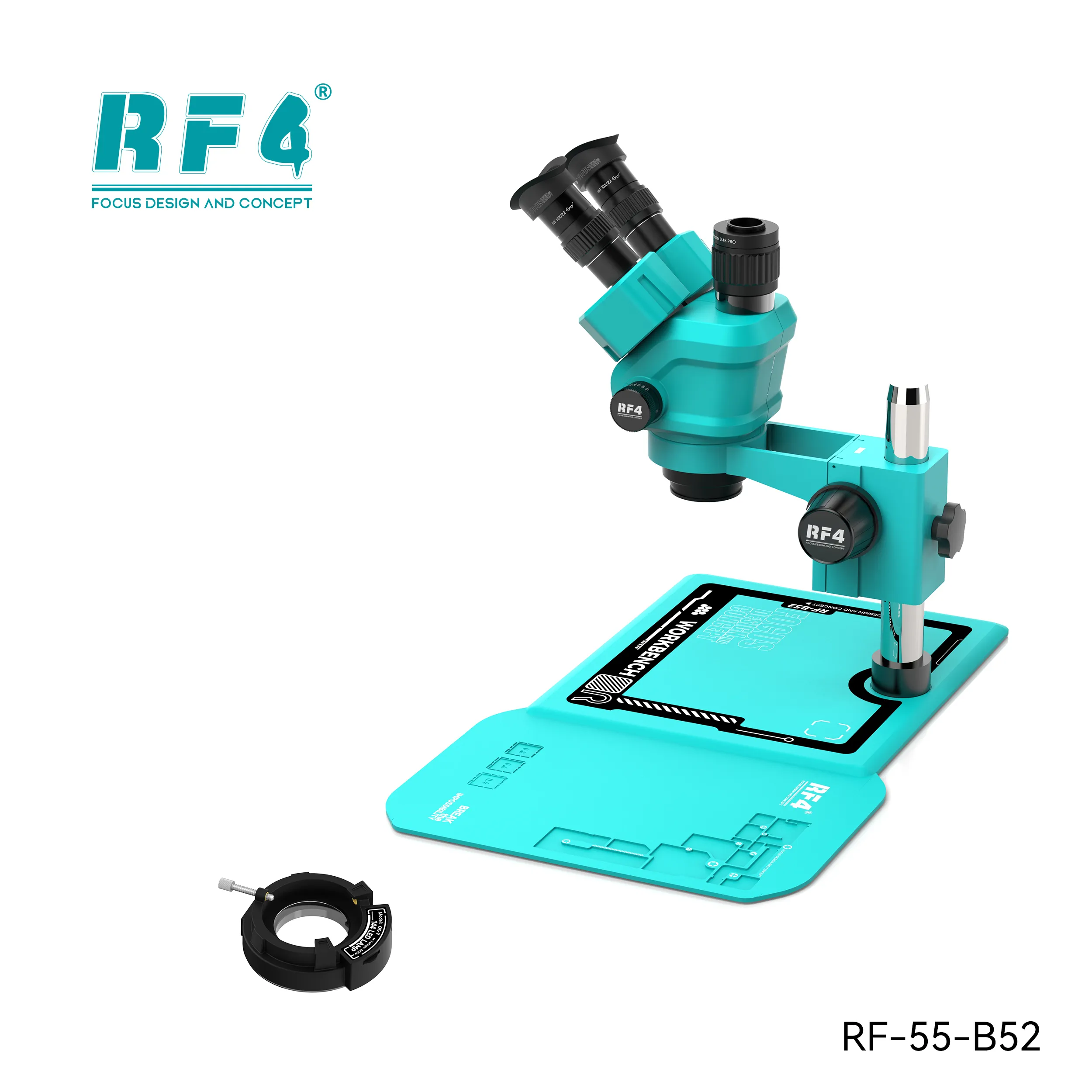
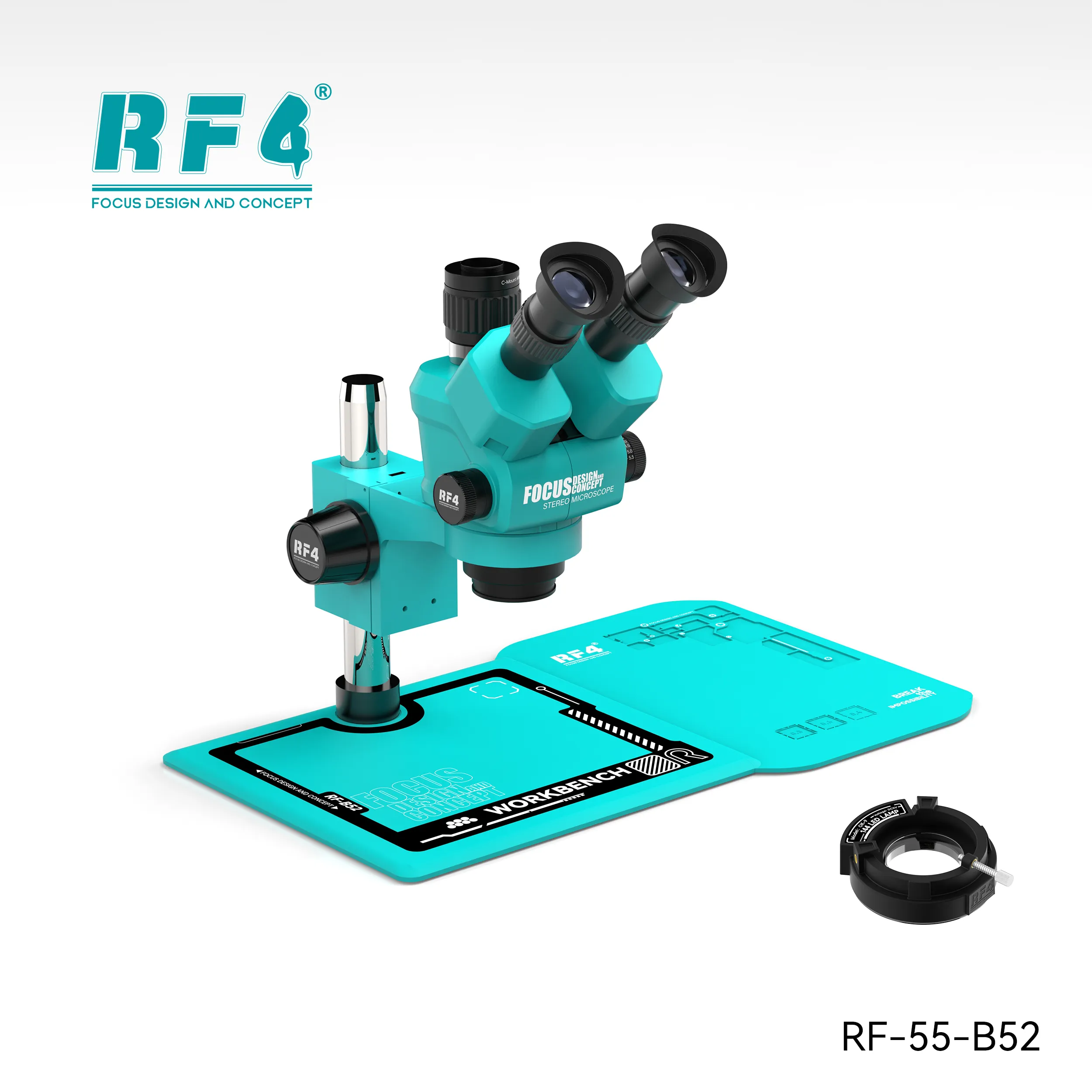
The RF4 RF6555 Pro Max (RF-55PM-B52) gives your repair bench a 6.5X–55X synchronous zoom trinocular head with adjustable-focus WF10X/22mm eyepieces. A geared zoom knob returns you to the same magnification every time, and the 0.48X CTV adapter keeps your monitor in sync with the eyepieces. The 144 LED ring light and dustproof lens handle daily rework. Everything stands on the RF-B52 base: a 310 × 500 mm heat-resistant silicone pad with a built-in metal plate, screw positioning grid and magnetic slot. You get one platform for BGA, IC and PCB repair on iPhone and Android boards.
| Weight | 10.0 kg |
|---|
10 in stock
Description
RF4 Trinocular Stereo Microscope for Board-Level Rework
The RF4 RF6555 Pro Max (RF-55PM-B52) sits at the top of the RF6555 series and serves one job: clear, stable optics for component-level mobile repair. This RF4 trinocular stereo microscope combines a 6.5X–55X synchronous zoom head, a 0.48X CTV adapter, a 144 LED ring light and the large RF-B52 silicone base with a built-in metal plate. Over the RF6555 Pro, the Pro Max adds adjustable-focus eyepieces, so each eye gets its own sharp image while the monitor feed stays in focus. You get one optical platform for inspection, micro soldering and camera work on iPhone and Android motherboards.
Optical System Built Around a 6.5X–55X Zoom Head
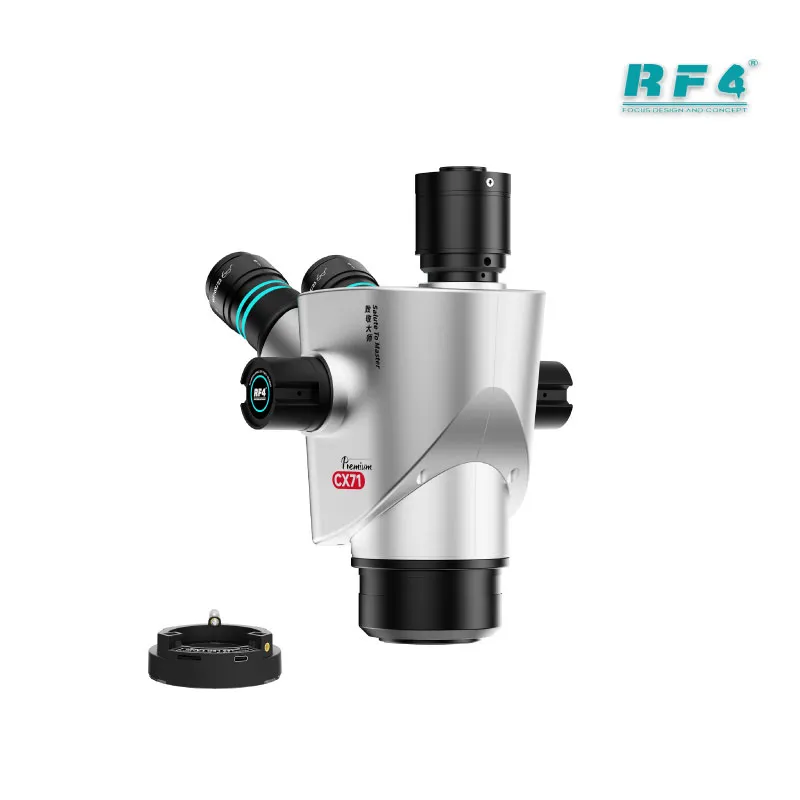
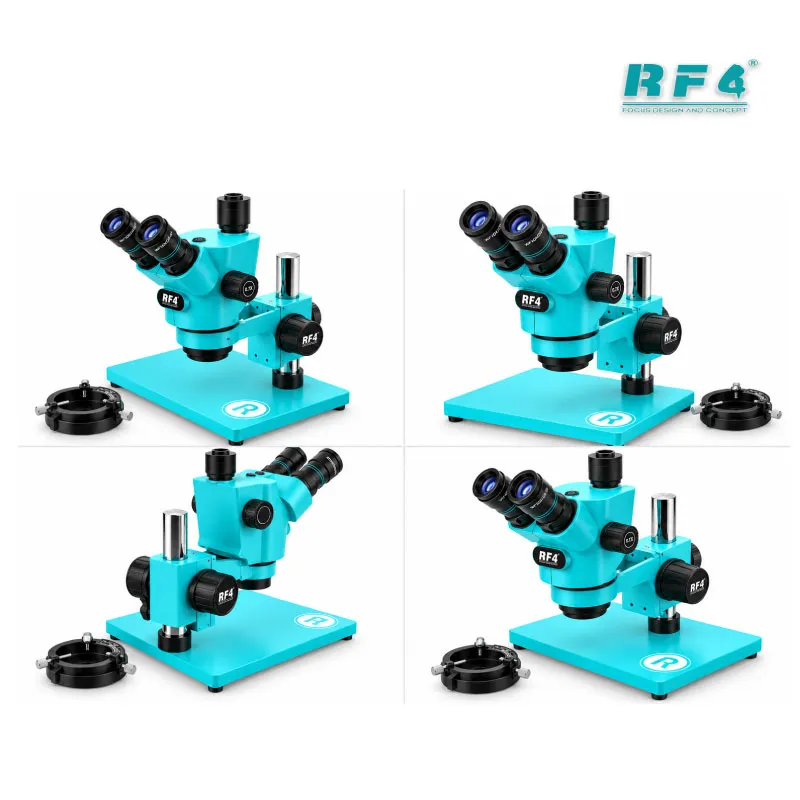
The head tilts at 45 degrees and swivels a full 360 degrees, so you turn the eyepieces toward any side of the bench without moving the board. At 6.5X you see a wide section of the logic board and trace a fault zone across the PMIC, charging IC and display connector in one view. At 55X you read component markings, check ball pads after IC removal and spot hairline cracks in solder joints. The WF10X/22mm wide-field eyepieces hold a broad, flat field across the zoom range. A dustproof lens under the objective takes the hit from flux smoke and solder spatter, which protects the main optics during hot air work. A limit lock holds the head at your set working height, so the focus point stays put when you lean on the stand.
Gear-Locked Zoom Positions
The zoom knob clicks into fixed gear positions instead of turning freely. That matters during rework: you drop to low power to place a hot air nozzle, then return to the exact same high magnification to inspect the joints, without hunting for the setting again. Fixed positions also keep camera framing consistent when you record a repair.
Adjustable-Focus Eyepieces
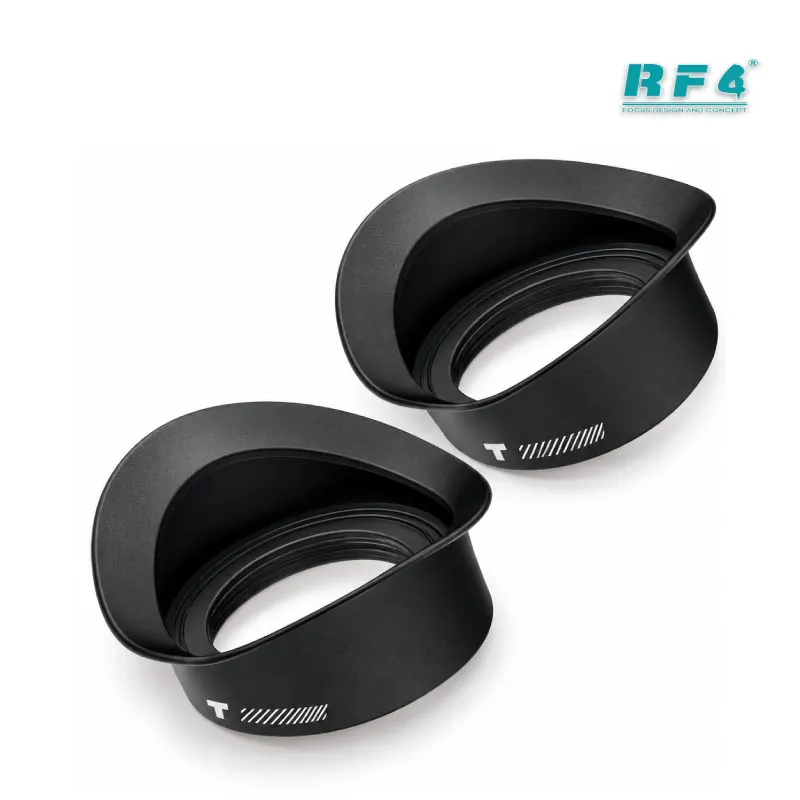
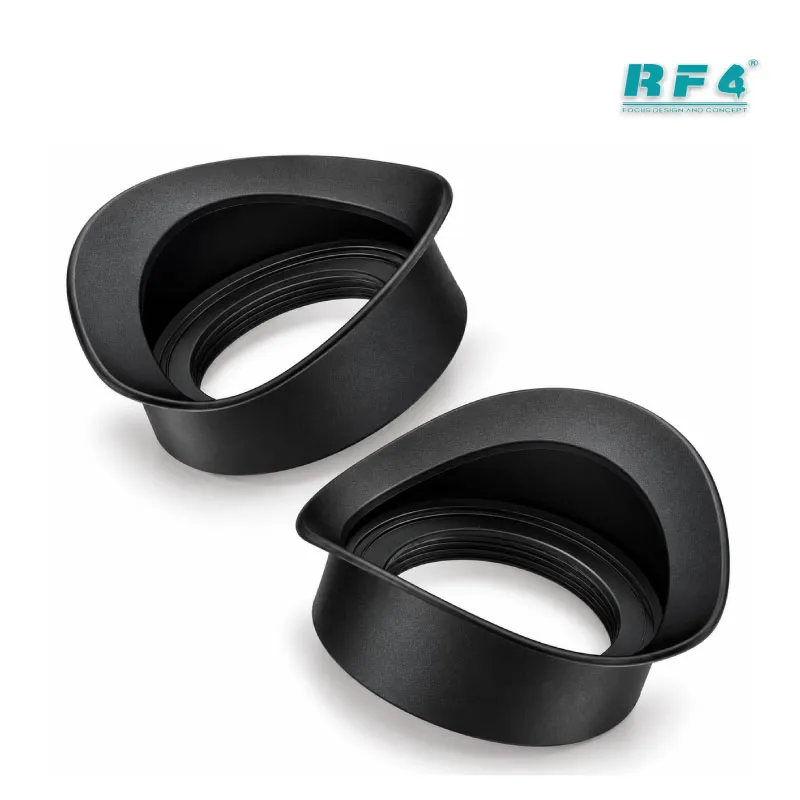
This is the Pro Max upgrade. Each eyepiece carries its own focus adjustment, so you correct the difference between your left and right eye once and keep a strain-free stereo view. On a bench that runs long micro soldering shifts, this cuts eye fatigue and keeps your depth perception accurate when you place tiny passives or lift a shield.
Synchronous Trinocular Port with 0.48X CTV
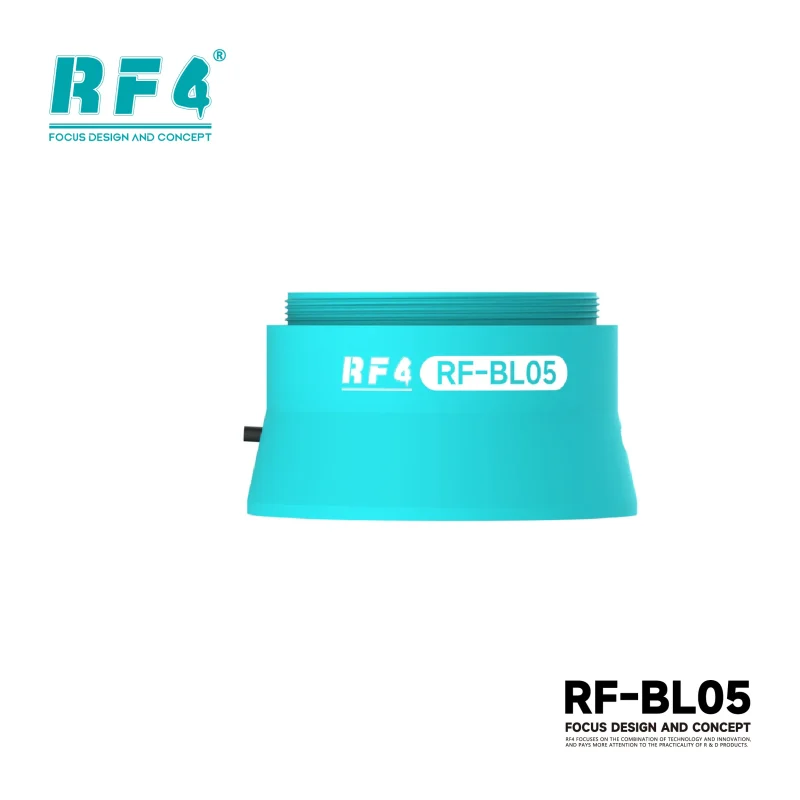
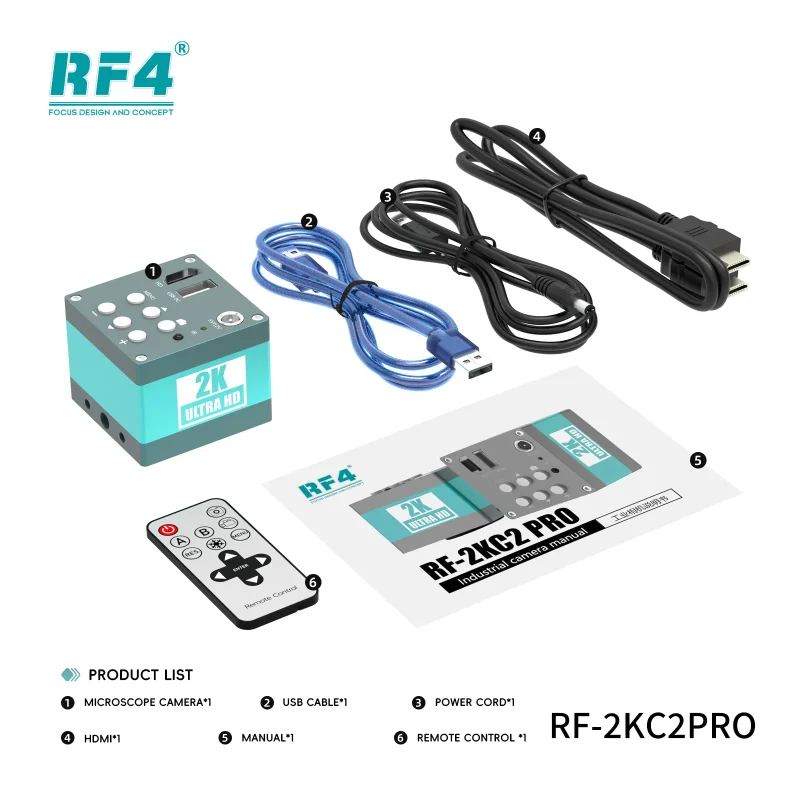
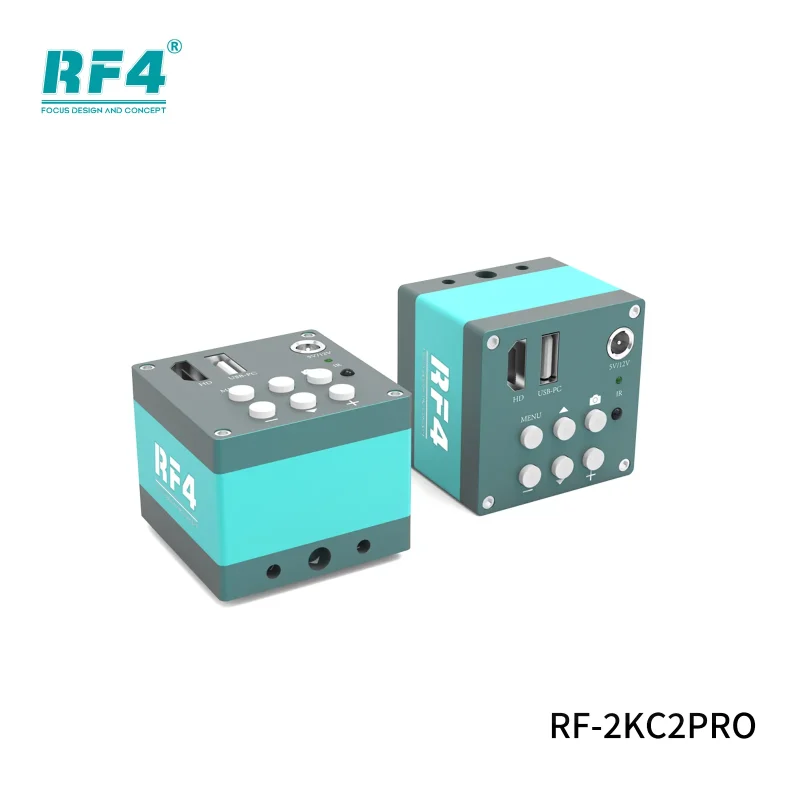
The third optical path feeds a camera through the included 0.48X CTV adapter. The adapter zooms in sync with the eyepieces, so the monitor and your eyes show the same magnification at every gear position. Mount a C-mount microscope camera and you can work from the screen, record repairs as proof for customers, or train junior technicians who watch the monitor while you work. If you send repair videos to customers on WhatsApp, a synced trinocular setup gives clean, centred footage without re-focusing the camera at every zoom change. The 0.48X ratio also keeps more of the board in frame than a 1X adapter, which helps when you film a full IC change karna sequence from removal to reballing to re-seating.
144 LED Ring Light for Shadow-Free Inspection
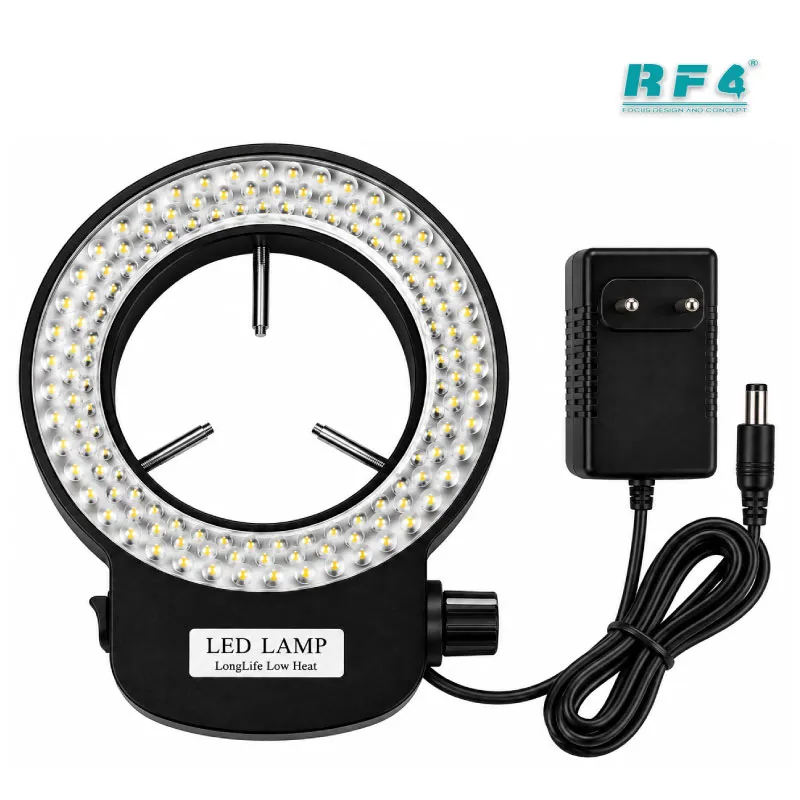
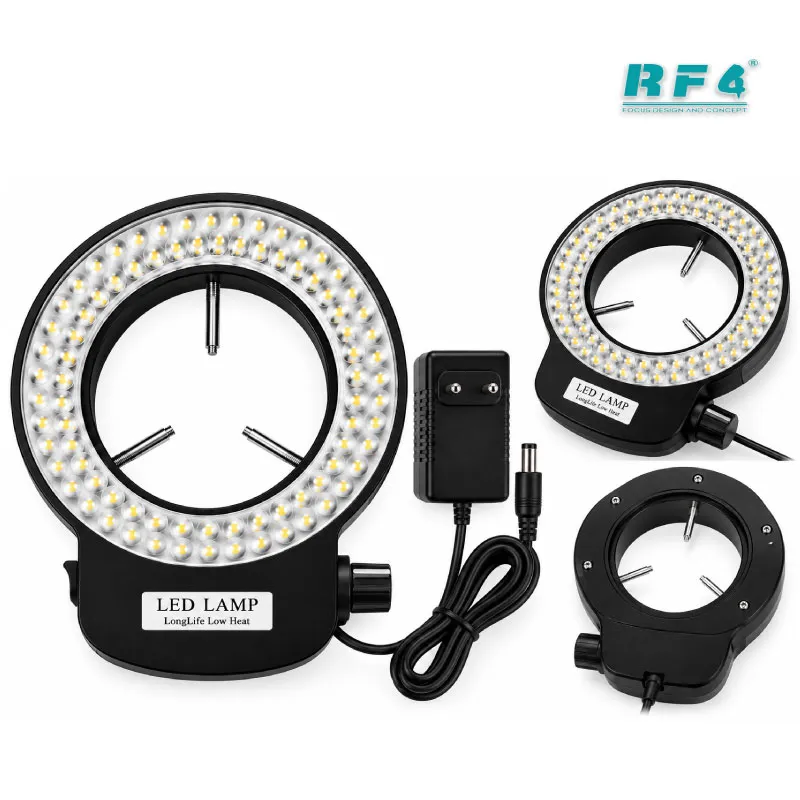
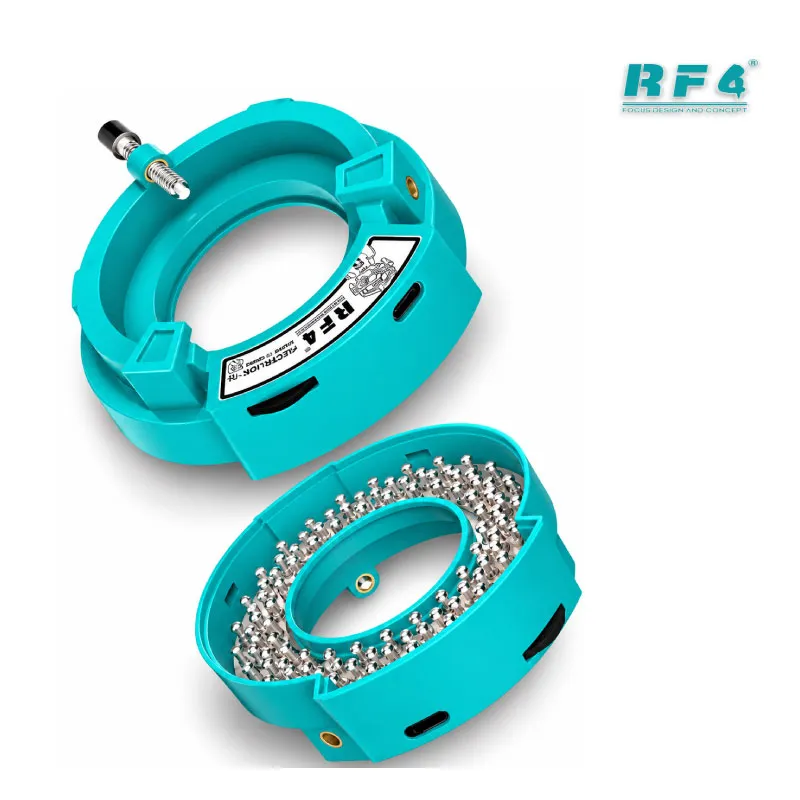
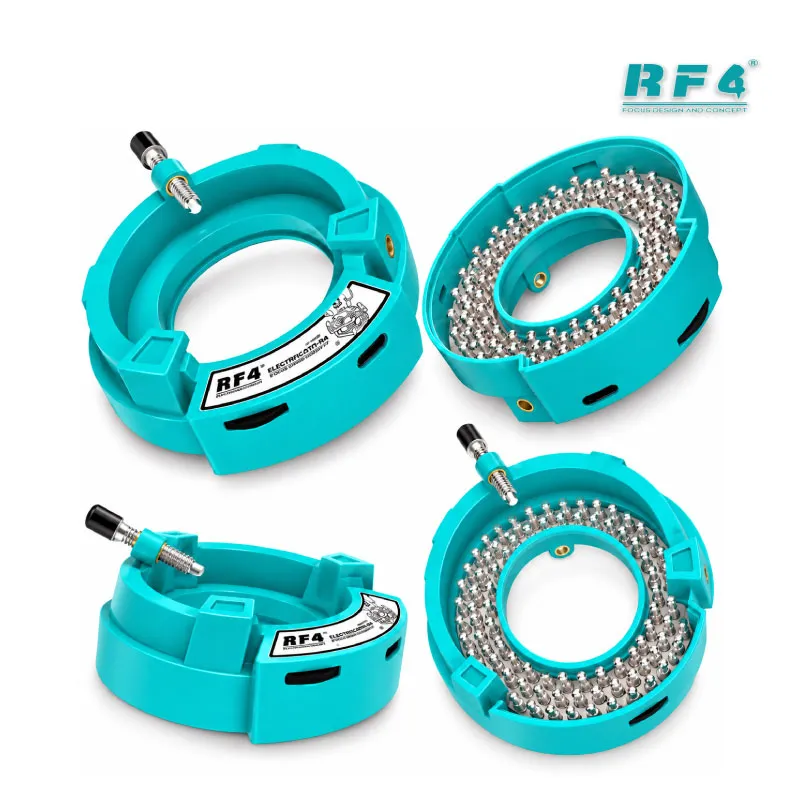
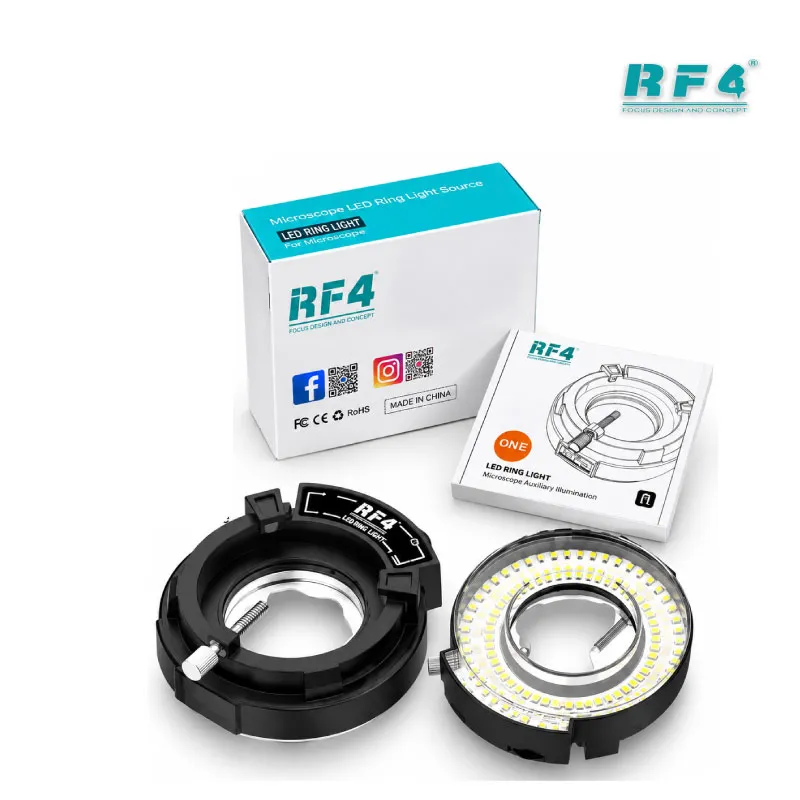
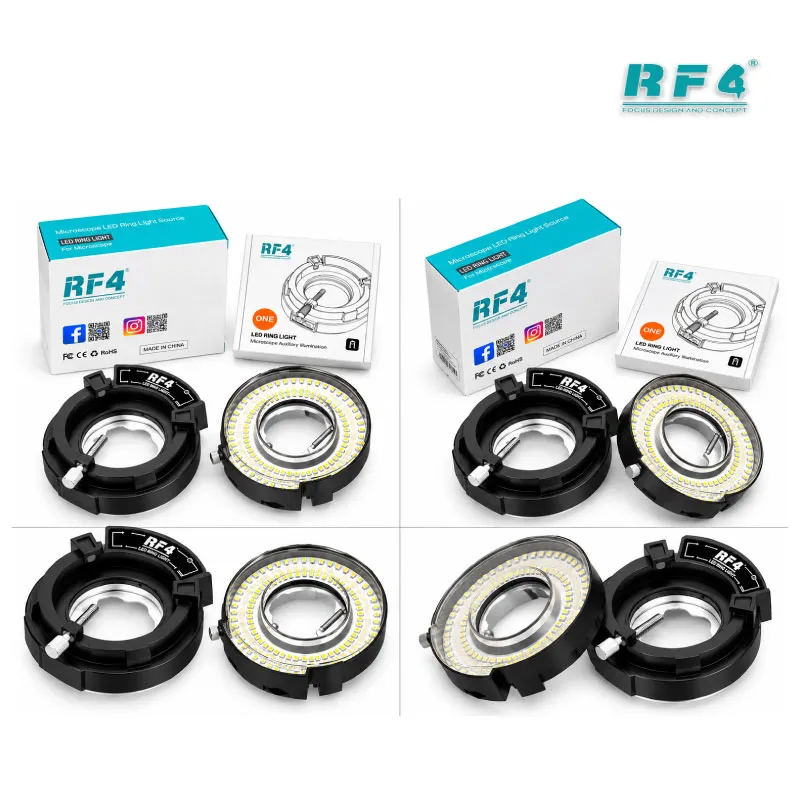
The 144 LED ring light mounts around the objective and throws even white light across the work area. You adjust the brightness to suit the job: lower for reading glossy IC markings without glare, higher for checking dark underfill and residue around a CPU. Even ring lighting removes the hard shadows that hide a lifted pad or a bridged pin on a fine-pitch connector. Because the light sits on the optical axis, the camera feed stays evenly lit too. For a boot loop issue traced to a cold joint under a shield, that shadow-free view lets you spot dull, grainy solder before you reflow it.
RF-B52 Silicone Base: Rework Surface and Stand in One
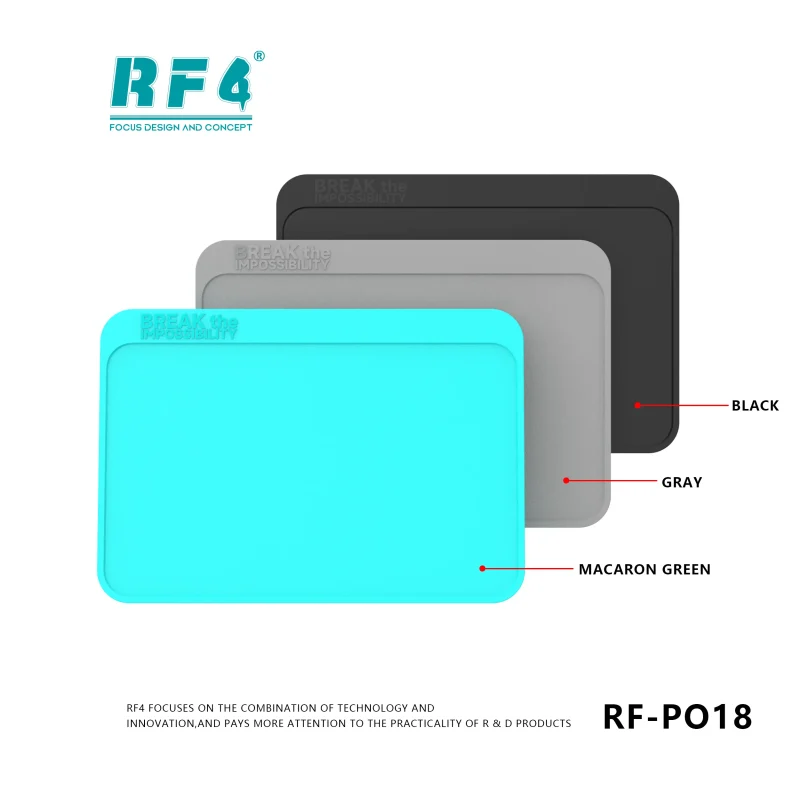
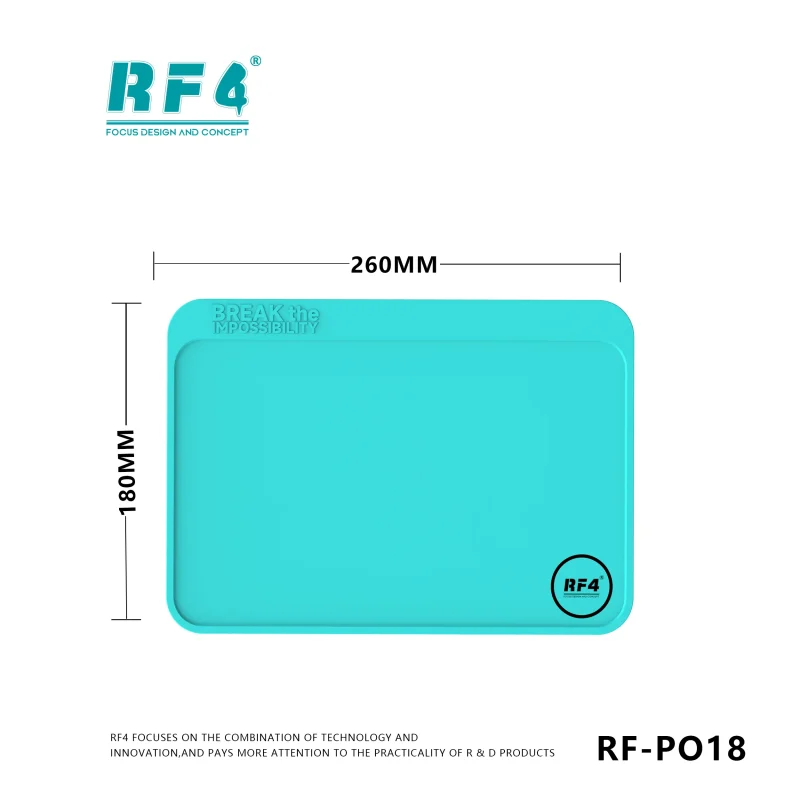
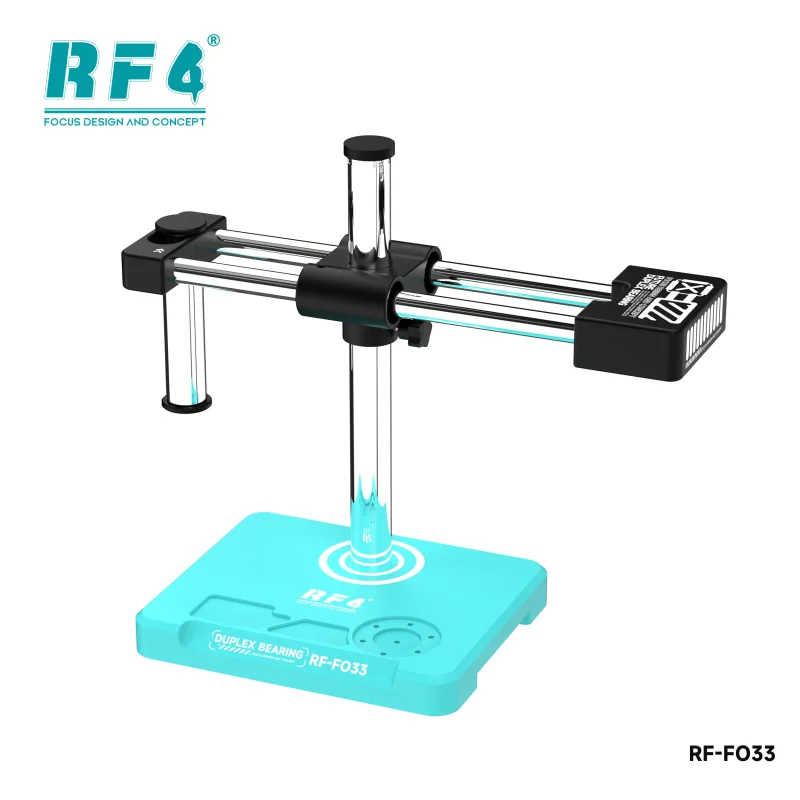
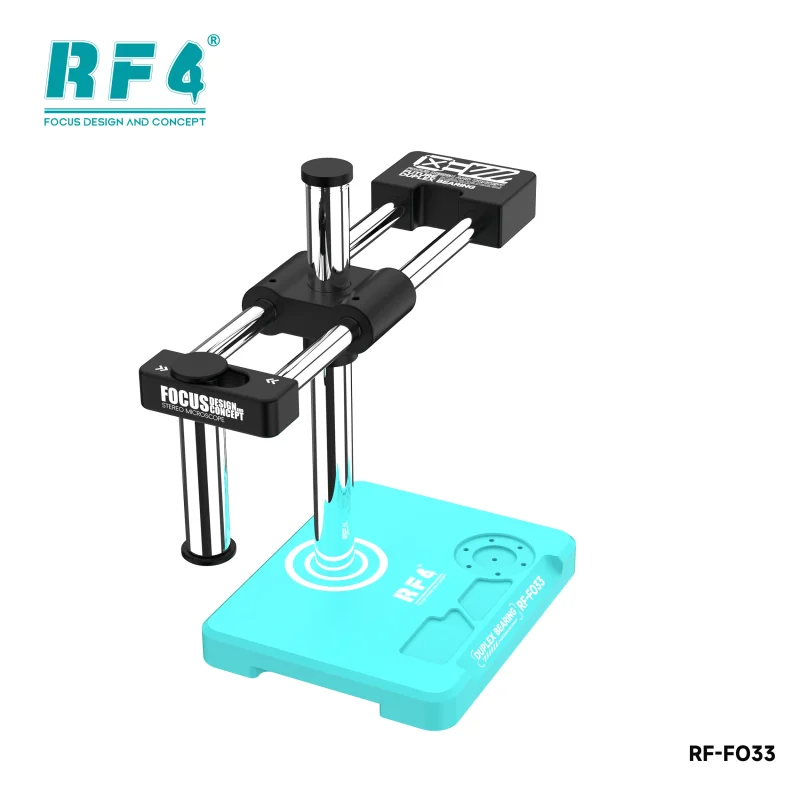
The RF-B52 base measures 310 × 500 mm, large enough to hold a phone frame, back glass, the logic board and your tools side by side. Its heat-resistant silicone surface handles hot air and soldering iron work, and the built-in metal plate adds mass that damps vibration at high magnification. A screw positioning grid lets you lay out screws in teardown order, so an iPhone reassembly goes back without a stray screw in the wrong hole. A magnetic slot holds small metal parts, shields and tweezers within reach. The base turns the microscope from a single-purpose optic into the foundation of a complete rework bench.
Where the RF4 Trinocular Stereo Microscope Fits Your Workflow
This unit covers every visual stage of board-level repair. During diagnostics, you use it after a multimeter or DC power supply flags a short, then inspect the suspect line for burnt capacitors, corrosion or a cracked inductor. For a dead phone or a charging issue, you check the charging IC, PMIC and battery connector pins before you commit to an IC change. During rework, it supports CPU, eMMC and UFS removal and reballing, jumper lagana on broken traces, and display connector replacement for a display problem. Network issue repairs on the RF section need the same high-power view to check tiny filters and shield solder. After repair, a final inspection at high magnification confirms joint quality before you power the board again.
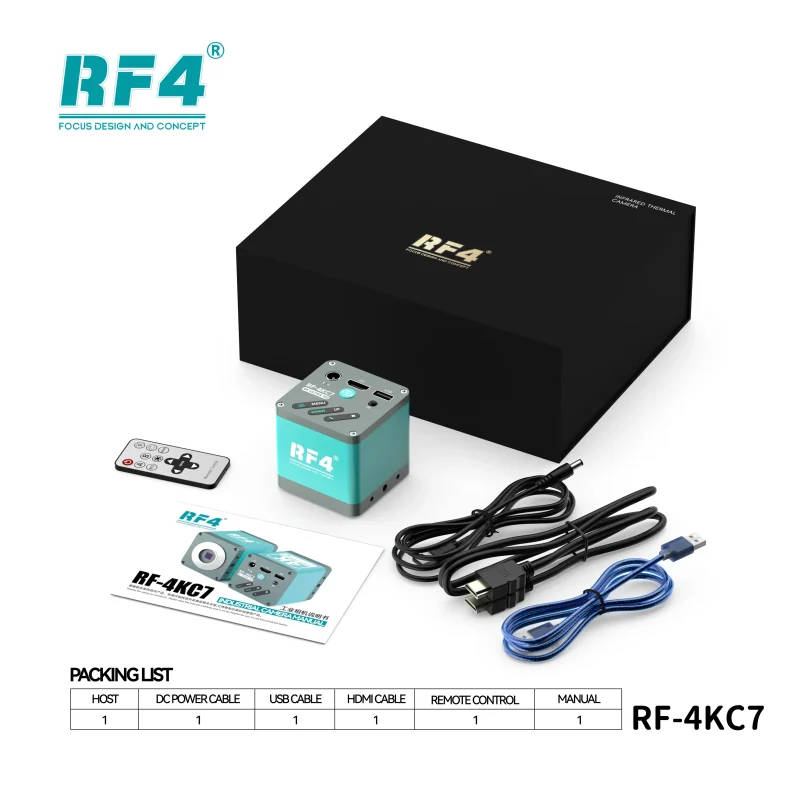
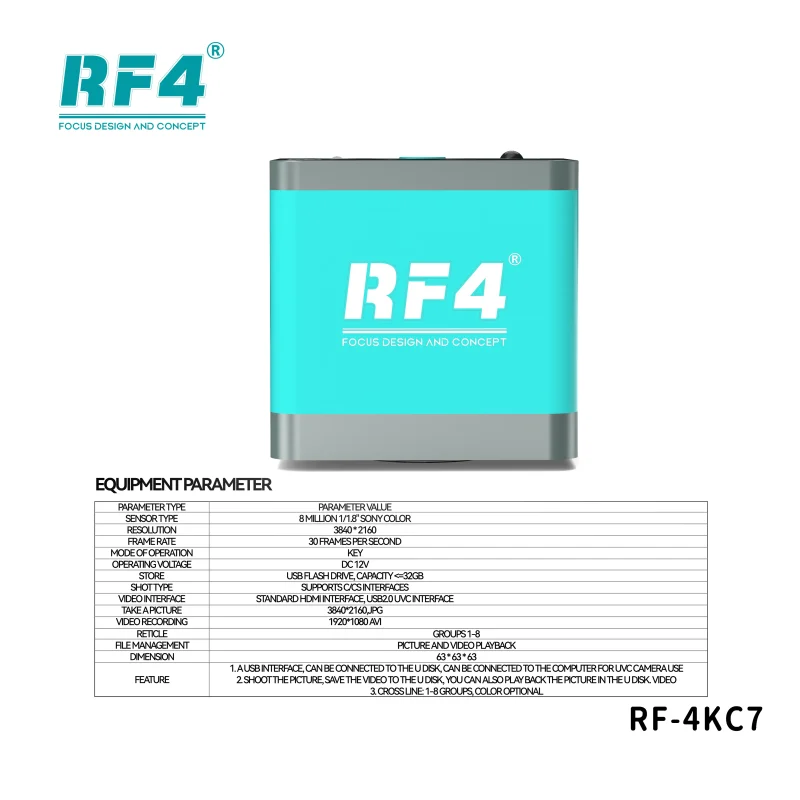
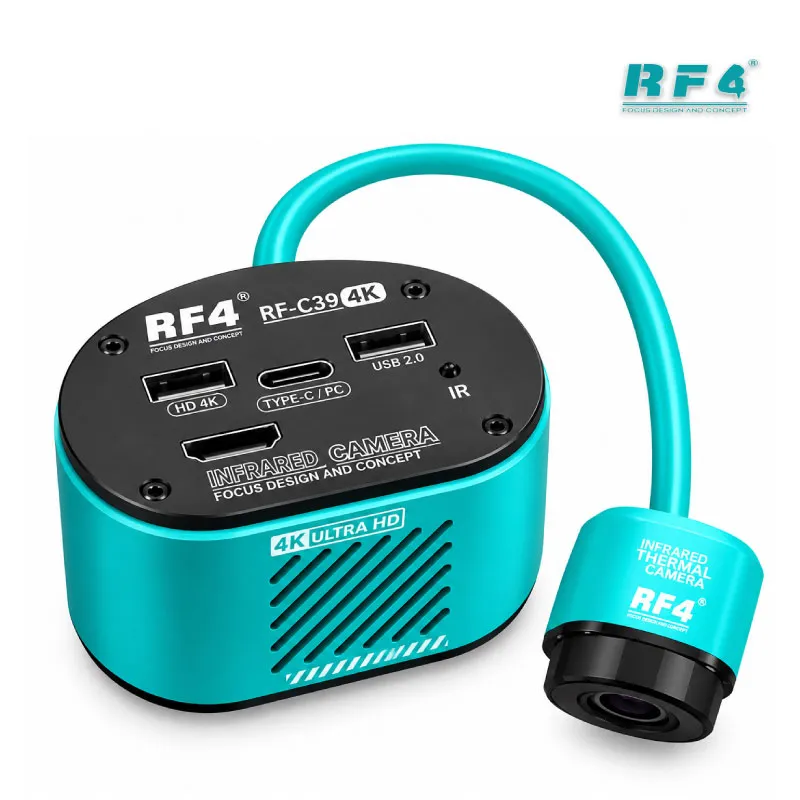
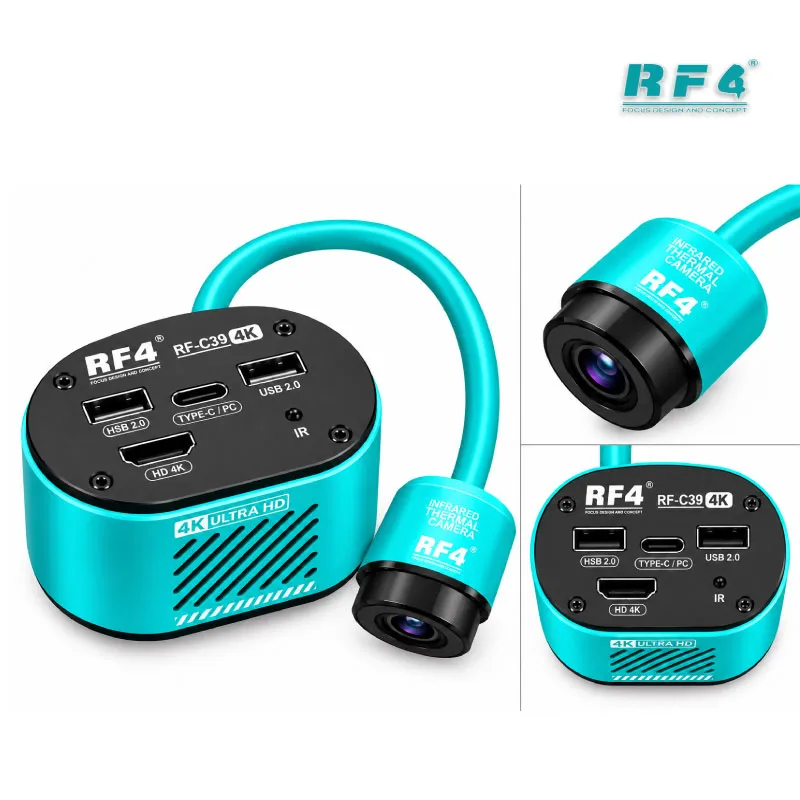
Pair it with a hot air station and a temperature-controlled soldering station for rework, a BGA reballing kit with stencils for chip work, a PCB holder to keep boards level under the objective, and a multimeter for fault finding. When you need sharper documentation or remote training, the natural upgrade path is a 4K C-mount microscope camera on the trinocular port.
Choosing Between the TVP, Pro and Pro Max
All three RF6555 variants share the same 6.5-55X trinocular microscope head, 0.48X CTV, 144 LED light, dustproof lens, limit lock and RF-B52 base. The RF6555TVP (RF-55-B52) is the entry set with free zoom. The RF6555 Pro (RF-55P-B52) adds the geared zoom lock. The RF6555 Pro Max (RF-55PM-B52) keeps the geared zoom and adds adjustable-focus eyepieces. If you spend most of your day under the eyepieces on BGA and IC work, the Pro Max is the PCB repair microscope to pick, because eye comfort and repeatable magnification pay back on every job. Training institutes and service centers with several technicians sharing one bench benefit most, since each user resets the eyepiece focus to their own eyes in seconds.
Reviews (0)
Q & A
Please login to post questions
Key Features
- 6.5X–55X synchronous zoom trinocular head
- Adjustable-focus WF10X/22mm wide-field eyepieces (Pro Max upgrade)
- Geared zoom lock for repeatable magnification
- 0.48X CTV adapter with monitor-to-eyepiece synchronous zoom
- 45° inclined head with 360° swivel
- 144 LED adjustable ring light with dustproof lens
- Limit lock to hold working height
- RF-B52 310 × 500 mm silicone base with metal plate, screw grid and magnetic slot
Specifications
| Brand | RF4 |
|---|---|
| Model | RF6555 Pro Max (RF-55PM-B52) |
| Category | Trinocular Stereo Microscope |
| Compatibility | Universal — any PCB that fits the RF-B52 base; standard C-mount microscope cameras via 0.48X CTV |
| Supported Devices | iPhone, Android, tablet and other electronic PCBs |
| Technology | 6.5X–55X synchronous zoom trinocular head, 45° inclined 360° swivel, WF10X/22mm adjustable-focus eyepieces, geared zoom lock, 0.48X CTV adapter, 144 LED ring light, dustproof lens, limit lock |
| Material | RF-B52 heat-resistant silicone pad with built-in metal plate |
| Dimensions | RF-B52 base 310 × 500 mm |
Common Repair Uses
- hort circuit tracing after multimeter or DC power supply checks
- Charging IC and PMIC replacement on dead phone and charging issue repairs
- CPU, eMMC and UFS removal, reballing and re-seating
- Jumper lagana on broken or burnt traces
- Display and battery FPC connector replacement
- RF section and network issue inspection under shields
- Cold joint and corrosion inspection on boot loop and hang on logo boards
- Repair recording and technician training through a monitor
Compatible Devices
- iPhone logic boards, including stacked sandwich boards
- Android motherboards from all brands
- iPad and tablet logic boards
- Smartwatch and wireless earbud boards
- Apple, Qualcomm, MediaTek and Exynos CPU packages (inspection and rework)
- eMMC, UFS and BGA memory chips
- Laptop motherboard sections
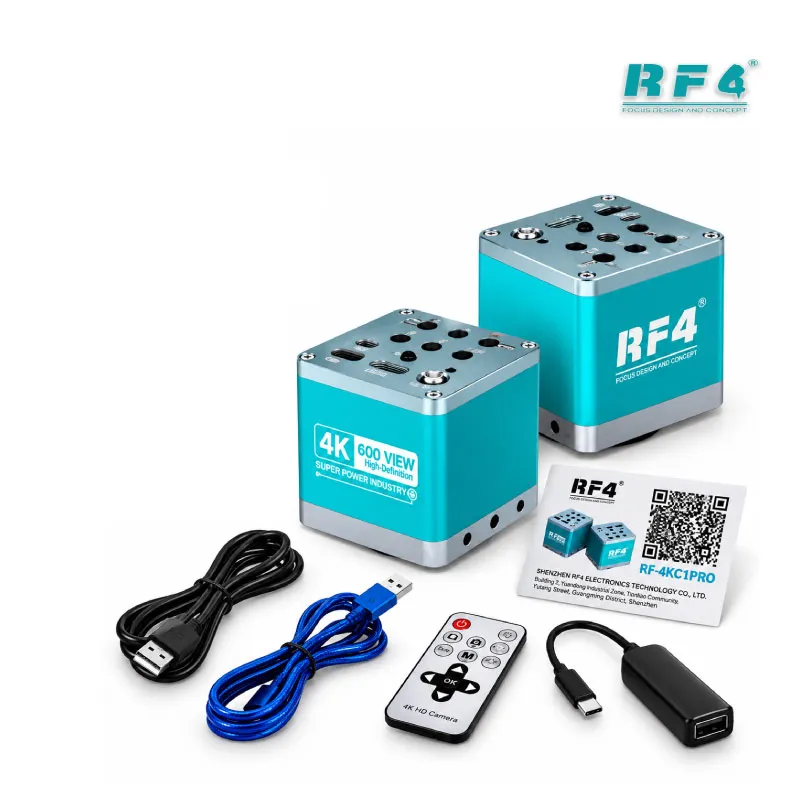
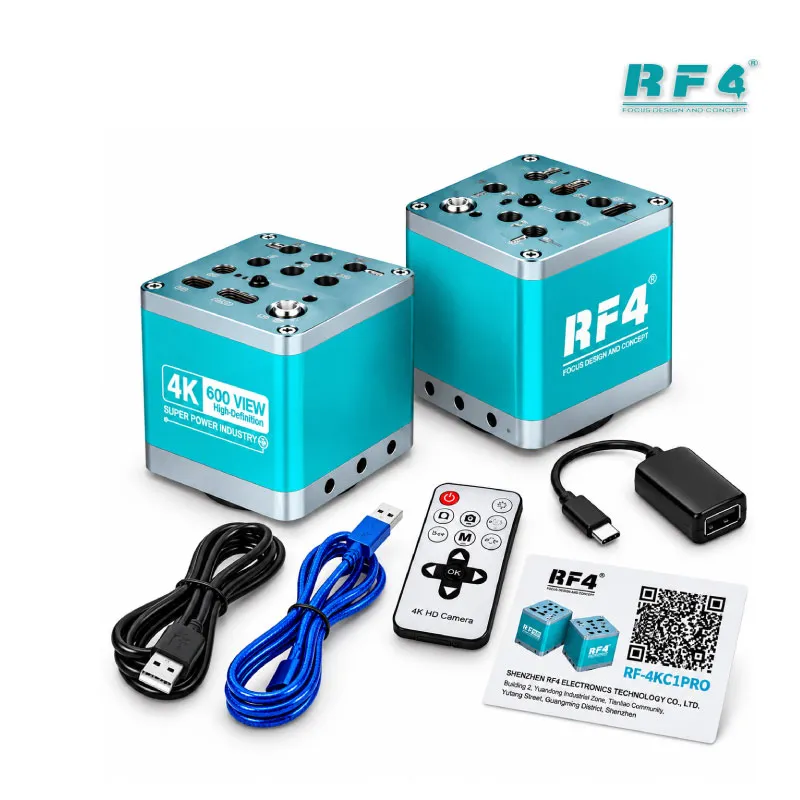
- Standard C-mount microscope cameras through the 0.48X CTV trinocular port
FAQ
What is the product name?
The product name is RF4 RF6555 Pro Max Trinocular Stereo Microscope with RF-B52 Base.
What is the brand of this product?
The brand of this product is RF4.
What is the model of this product?
The model of this product is RF6555 Pro Max (RF-55PM-B52).
What is this product used for?
This product is used for magnified inspection, micro soldering, BGA reballing and IC replacement on mobile phone and electronic PCBs.
Which devices are compatible with this product?
This product is compatible with any iPhone, Android, tablet or other electronic PCB that fits on the RF-B52 base, and with standard C-mount microscope cameras through the 0.48X CTV adapter.
Who should use this product?
This product is suitable for mobile repair technicians, repair shops, service centers, and professional users.
What is the difference between RF4 RF6555 Pro and RF6555 Pro Max?
Both models use the 6.5X–55X trinocular head, 0.48X CTV, 144 LED light, geared zoom lock and RF-B52 base. The Pro Max adds adjustable-focus eyepieces, so each eye gets its own focus correction for a sharper, strain-free view.
Which camera works with the RF4 RF6555 Pro Max trinocular port?
The trinocular port accepts a standard C-mount microscope camera through the included 0.48X CTV adapter, and the camera image zooms in sync with the eyepieces.
Related products
-17% Sold out


Reviews
There are no reviews yet.